
Last updated November 14, 2026
 Metal roofing
 Architectural shingles
 Tile roofing
 GAF
 Owens Corning
 Flat & low-slope
Free roof inspection with deck photos before we talk money - GAF and Owens Corning certified installation
Roofing Cost Breakdown: The Santa Clara Homeowner’s Reference for 2026
Two Santa Clara homeowners with identical 2,000-square-foot roofs can receive quotes that differ by $8,000, and both quotes can be entirely legitimate. The difference isn’t dishonesty. It’s scope. One estimate assumes a full tear-off, new underlayment, and a permit; the other quietly assumes the old shingles stay put and the flashing gets reused. Same roof, same address, two very different jobs. This guide breaks Santa Clara roofing costs down by project type and by line item, so you can read a quote for what it actually contains instead of comparing only the number at the bottom.
Quick Answer
Roof work in Santa Clara in 2026 typically ranges from roughly $450 to $1,200 for a targeted spot repair, $18,000 to $34,000 for a full asphalt shingle replacement on a typical single-story home, $28,000 to $55,000 or more for tile, and $14,000 to $26,000 for a flat or low-slope re-roof. The total swings far more on scope and prep than on shingle brand, which is why the written line-item estimate, not the advertised range, is the number that matters.
Styles & brands we work with
- Architectural shingles
- Metal roofing
- Tile roofing
- GAF
- Owens Corning
- Flat & low-slope
Table of Contents
- What do the four common Santa Clara roofing projects cost in 2026?
- Why is roofing labor so expensive in the Bay Area?
- Tear-off vs. overlay: what’s the real difference in dollars?
- How do you read a roofing estimate line by line?
- Contractor-grade vs. premium lines: when does the upgrade pay?
- What do Santa Clara permits and inspections add?
- How does Santa Clara’s climate shape what you should buy?
- How do you compare three estimates fairly?
What do the four common Santa Clara roofing projects cost in 2026?
Cost in Santa Clara tracks project type more closely than material brand. A spot repair and a tile re-roof share almost no cost structure: one is mostly labor and access, the other is mostly material, disposal, and permit. Here are typical 2026 ranges for the four jobs we’re asked about most. Treat these as planning numbers, not quotes. Your written estimate sets the final price.
- Spot repair (a flashing fix, a few damaged shingles, a single leak chase): roughly $450 to $1,200. Most of this is diagnostic time, roof access, and matching material to an existing roof.
- Full asphalt shingle replacement (architectural shingles, tear-off, underlayment, flashing, permit): roughly $18,000 to $34,000 on a typical single-story Santa Clara home. Two-story homes and complex rooflines push toward the top of the range or above it.
- Tile replacement (clay or concrete tile, tear-off and reset, underlayment, flashing): roughly $28,000 to $55,000 or more. Tile itself lasts; the underlayment beneath it does not, and replacing that is the bulk of the work.
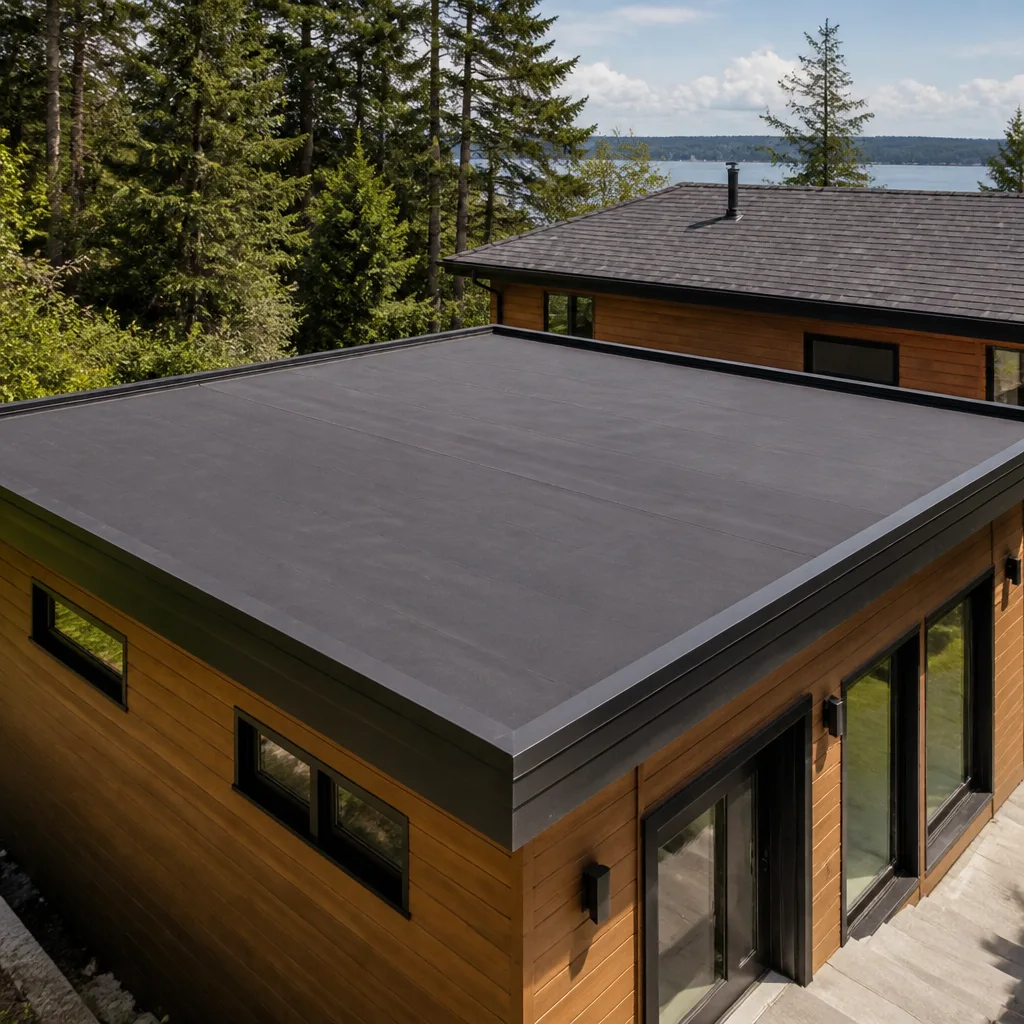
- Flat or low-slope re-roofing (modified bitumen or single-ply membrane): roughly $14,000 to $26,000. Small flat sections over a garage or addition run far less.
Notice what doesn’t appear here: a single “average.” Averages blend a patch job with a full tile re-roof and produce a figure nobody can use. If your roof is nearing the end of its life and you’re weighing options, our roof repair guide explains how to tell whether a repair buys you real time or just delays the inevitable, and our roof replacement page walks through what a full re-roof actually involves.
Why is roofing labor so expensive in the Bay Area?
Labor is the single largest line on most Santa Clara roofing estimates, often 50 to 60 percent of the total, and it costs more here than the state or national figures you’ll find in online cost guides. Three forces drive it, and understanding them tells you why a suspiciously cheap quote usually isn’t.
- Prevailing wage dynamics. Public and publicly funded work in the Bay Area carries wage requirements that set a floor for the local labor market. That pressure ripples into private residential pricing, because crews can command more working elsewhere. A crew that’s paid properly is also a crew that’s still around to stand behind its work.
- Crew overhead. Insurance, workers’ compensation, dump fees, equipment, and travel between jobs all scale with the region’s cost of living. A roofing crew is a small business with real overhead. When a bid comes in far below everyone else, something in that overhead is usually missing, and it’s often insurance.
- Permit processing time. Santa Clara permits and inspections add both fees and scheduling friction. A project can’t start until the permit clears, and the crew can’t leave until the inspection passes. That’s real time the contractor has to plan around, and it’s a reason to start the permit process early rather than the week you want work to begin.
For homeowners, the practical takeaway is this: when you compare quotes, compare the labor assumptions. Does one bid include hauling away all the old material? Does it include replacing rotten sheathing, or does it list sheathing as a per-sheet add-on discovered later? A bid that seems $3,000 cheaper often just has $3,000 of work pushed outside the number.
Tear-off vs. overlay: what’s the real difference in dollars?
A tear-off removes the old roofing down to the deck before installing the new. An overlay installs new shingles directly over the old layer. In real dollars on a typical Santa Clara home, the tear-off adds roughly $4,000 to $8,000 to the project, mostly in disposal and labor, and it’s usually money well spent.
- Disposal. Old shingles are heavy. Hauling them off, paying dump fees, and running multiple trips adds real cost that an overlay skips.
- Deck inspection. A tear-off exposes the sheathing, which lets the crew find and replace soft or water-damaged panels before they cause the new roof to fail. An overlay hides that deck for the life of the new roof.
- Weight and warranty. Stacking a second layer adds load to the structure and typically shortens how long the new roof will last. It can also affect what a manufacturer will stand behind.
Here’s the part many homeowners don’t know: California code doesn’t let you keep overlaying indefinitely. Most jurisdictions limit how many layers a roof can carry, and once you hit that limit, the next job has to be a full tear-off. If your roof already has two layers, the “cheaper” overlay isn’t on the table. The overlay option is also the one contractors reach for when they want to lower a bid without lowering their price. Ask, in writing, which option the estimate assumes. If the answer is overlay and your roof is already old, price out the tear-off before you decide. A licensed Santa Clara roofing contractor should be able to quote both honestly.
How do you read a roofing estimate line by line?
A credible roofing estimate breaks into five cost buckets. When you can name them, hidden costs become visible before you sign. Here’s what each one should look like, and what questions to ask.
- Materials. Shingle brand and product line, underlayment type, flashing, drip edge, ridge vent, and nails. It should name specific products, not “architectural shingles.” If it only names a brand and not the product line, ask which one, because that’s where the cost difference lives.
- Labor. Usually expressed as squares of roof area and complexity. Steep pitches, dormers, skylights, and multiple stories take more labor. Ask whether the price covers a crew of any size for a set number of days, or whether it’s priced by scope.
- Disposal. Dumpster rental and haul-away should appear as its own line. If it’s missing, ask whether it’s included or whether it appears later as a surprise.
- Permit. The permit fee and who pulls it. It should be included and in the contractor’s name, not left for you to obtain. If the estimate doesn’t mention a permit, ask directly.
- Contingency and markup. Every contractor builds in some margin, and that’s fair. What you want to know is whether the bid includes a defined scope and how changes are handled. A written estimate with fixed pricing and no change orders once work starts is the standard to ask for.
Two lines deserve special scrutiny. First, sheathing replacement: many bids list it as a per-sheet charge discovered mid-project. Ask what happens if the deck has soft spots, and get the per-sheet figure in writing. Second, warranty language: the written material warranty should come from the manufacturer, and the workmanship warranty from the contractor. If either is vague, ask for the specific terms. A company that connects you with experienced local professionals should be happy to put all of this on paper.
Contractor-grade vs. premium lines: when does the upgrade pay?
Two roofs installed the same day with the same crew can differ by thousands of dollars based purely on the product line. Contractor-grade shingles are the builder’s-value tier: adequate, widely available, and cost-effective. Premium and manufacturer-certified lines add thicker mats, better wind and impact ratings, and longer warranties, and on this question the upgrade is not always worth it.
Where contractor-grade makes sense: a rental property, a garage or shed, or a home you plan to sell in a few years. Where premium lines pay: a primary residence you intend to keep, especially on a roof that catches a lot of afternoon sun. Thicker, better-rated shingles resist sun degradation longer, which is a real consideration in Santa Clara’s warm, dry summers. The premium also comes with a better warranty, which is worth something when the roof is still under it a decade from now.
The material choice also depends on what’s already on your roof. If you’re replacing a section, matching an existing roof matters more than upgrading it. We work with seven major manufacturers – GAF, CertainTeed, Owens Corning, IKO, Atlas, Tamko, and Boral – across value, mid-range, and premium lines. That range means we can match replacement sections to your existing roof, or steer you to the best-value product for your climate and budget, without pushing a brand just because it’s the one we happen to stock. The right call is the one that fits your roof, your climate, and your budget.
What do Santa Clara permits and inspections add?
Most full replacements in Santa Clara require a building permit, and the permit is not a bureaucratic formality. It’s what triggers an inspection, and the inspection is what confirms the work meets code before it’s covered up. Budget for the permit as part of the project, and plan the schedule around it.
Here’s how the permit and inspection sequence usually runs:
- Permit application. The contractor submits plans and scope. Timelines vary by the city’s current workload, which is why an estimate that promises a start date before the permit is even filed deserves a follow-up question.
- Permit issued. Work can begin. The permit should be in the contractor’s name, and you should be able to see it.
- Deck inspection. On a tear-off, the inspector may check the sheathing and underlayment before the new roof goes on. This is a good moment to have your questions ready.
- Final inspection. After the roof is complete, the inspector signs off. Only then is the permit closed.
If a contractor suggests skipping the permit to save time or money, that’s a signal about how the rest of the job will go. Unpermitted work can complicate a future sale, and it removes the independent check that the roof was installed the way the code requires. Ask every bidder whether they pull permits and pass inspections, and get the answer in writing. It’s one of the easiest ways to tell a professional from a bargain.
How does Santa Clara’s climate shape what you should buy?
Santa Clara’s climate is mild, which is good news for roof longevity, but it comes with its own wear pattern. Winters are wet, not freezing, and summers are warm and dry. That combination stresses a roof in ways that homeowners from colder regions don’t expect, and it changes which upgrades are worth the money.
- Sun exposure does the slow damage. Long dry summers age shingles from above, drying out the mat and making them brittle. It’s the sun, more than rain, that ends a shingle roof’s life here. That’s why a heavier, better-rated shingle can pay for itself over a long hold.
- Winter rain finds the weak points. Because the region’s rainy season is concentrated, small flashing failures and clogged valleys turn into leaks fast. A professional inspection before the wet season catches these cheaply.
- Mild temperatures mean less thermal shock. Roofs here don’t go through the hard freeze-and-thaw cycling of colder climates, so the material itself lasts longer than national averages suggest. The tradeoff is that homeowners often underestimate how much sun has aged the roof.
For material choice, this points toward products rated for sun exposure and wind, with quality underlayment doing the quiet work beneath the shingles. If you’re not sure what your roof needs, a standalone inspection is the honest way to find out. Our Santa Clara overview explains how the local climate and housing stock shape what we see on roofs here, and our team is glad to walk your roof and tell you exactly what it needs, whether that’s a repair, a replacement, or nothing at all.
How do you compare three estimates fairly?
Comparing three roofing quotes is only useful if they describe the same job. Most don’t. The fix is to normalize them before you decide, line by line. Here’s a simple method.
- Check the scope first. Does each quote assume a full tear-off, or does one quietly assume an overlay? Does each include underlayment, flashing, and drip edge, or are those extras?
- Compare square footage, not totals. Each estimate should state the roof area in squares. If one is estimating a smaller area than the others, the totals aren’t comparable.
- Look for the missing lines. Disposal, permit, and sheathing contingency should all be present. A quote that omits them isn’t cheaper; it just hasn’t told you the full price yet.
- Ask about change orders. Fixed pricing with no change orders once work starts is the standard. If a quote leaves room for open-ended charges, factor that into your comparison.
- Confirm licensing and insurance. State-licensed and insured should be on the paperwork. Ask for it, and confirm the permit will be pulled in the contractor’s name.
When you’ve normalized the three, the cheapest bid often stops being the cheapest. The question to ask each contractor is the same: show me what’s in your scope, and what isn’t. A company worth hiring will answer without hesitation. Sunstone Roof Repair offers free estimates in Santa Clara with written line-item quotes, so all three of yours can be compared on equal footing.
Common Mistakes to Avoid
- Comparing totals instead of scopes. A $12,000 quote and a $20,000 quote for the same roof usually describe two different jobs. Normalize the scope before you compare the numbers.
- Letting the cheapest bid win on price alone. The lowest bid is often the one with the most work pushed outside the number, discovered later as a change order.
- Skipping the permit to save time. Unpermitted work leaves you without an independent inspection and can complicate a future sale. In Santa Clara, that trade rarely pays.
- Choosing an overlay on a roof that’s already at its layer limit. California code limits how many layers a roof can carry, and once you’re at the limit, the overlay option isn’t available even if a bid offers it.
- Buying the premium shingle on a rental you’ll sell next year. Premium lines make sense for homes you intend to keep; for a short hold, contractor-grade is often the smarter spend.
- Accepting a verbal estimate. Without a written, line-item scope, there’s nothing to hold anyone to when the work is done or the bill arrives.
- Ignoring the deck until the new roof is on. Sheathing problems you don’t address during the tear-off become problems you’ll pay for twice.
See the difference
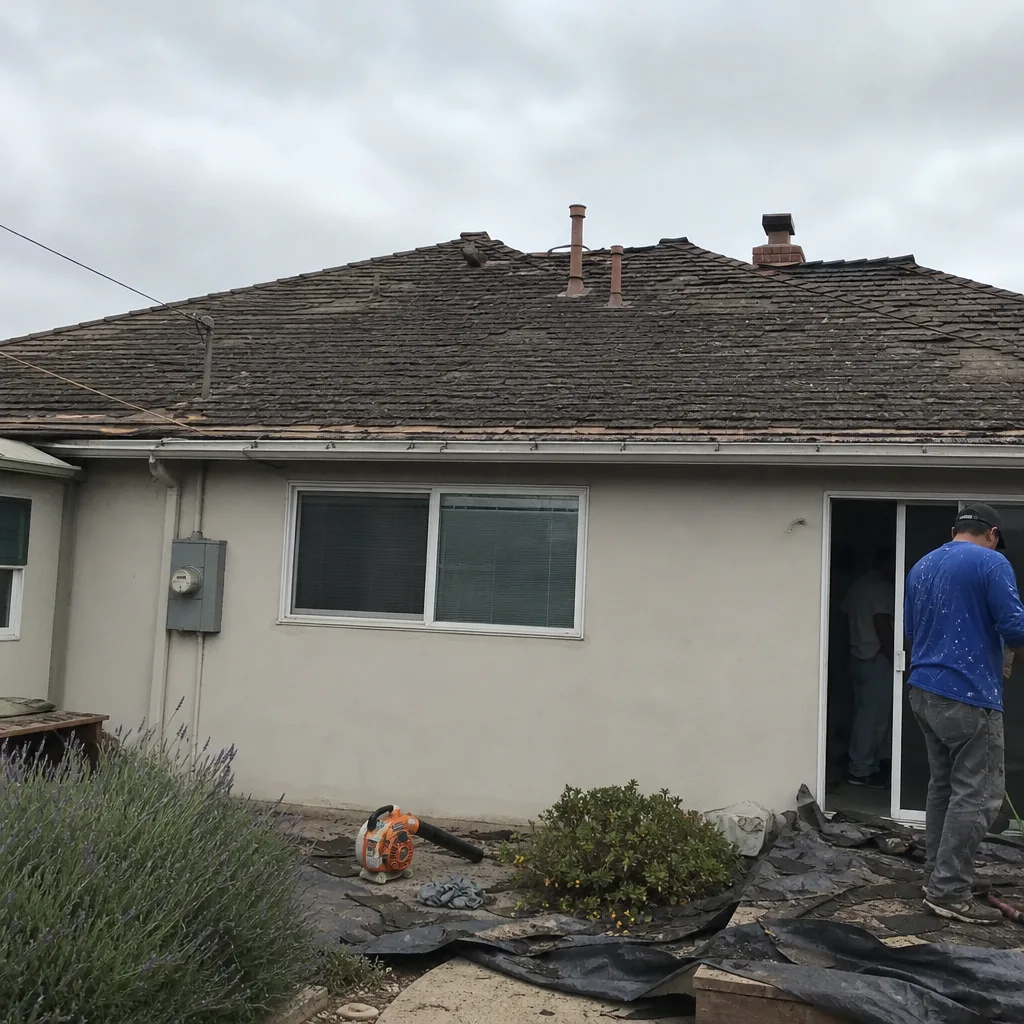 Before
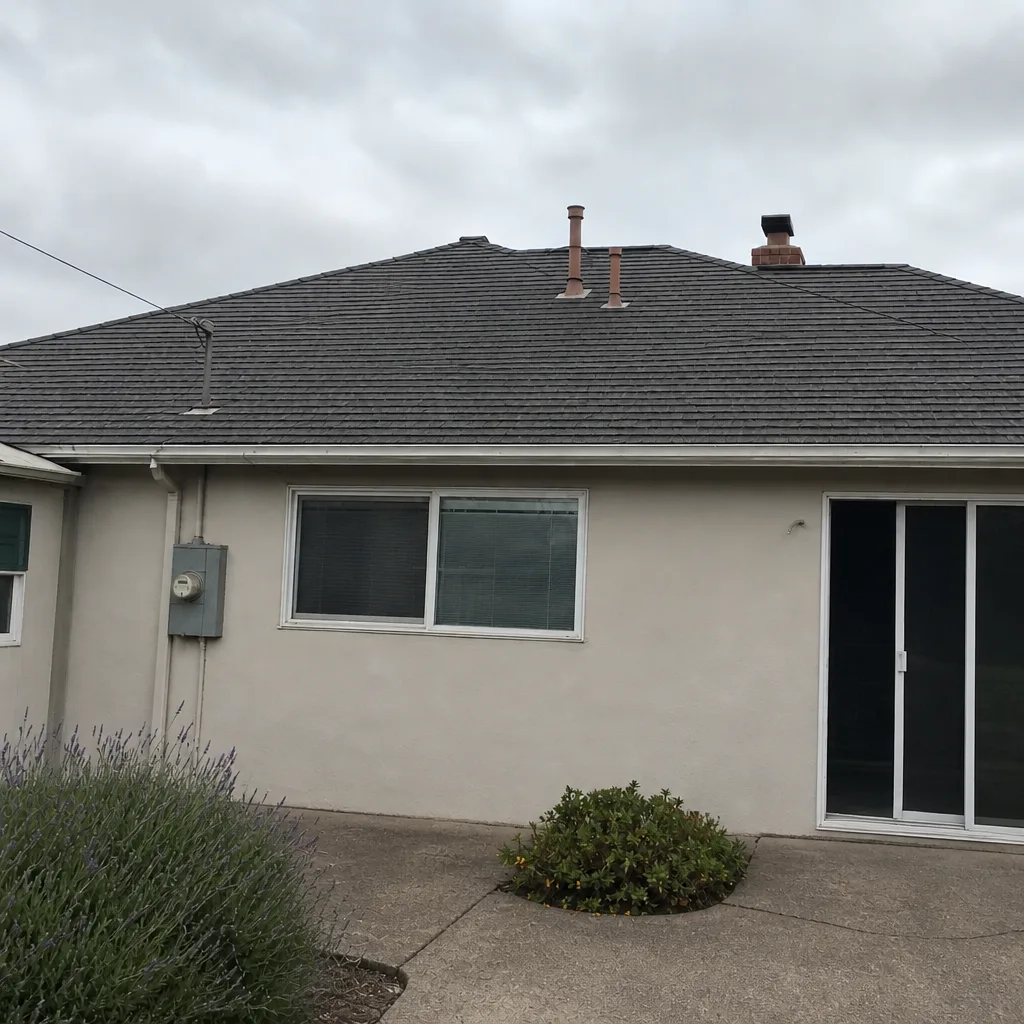 After
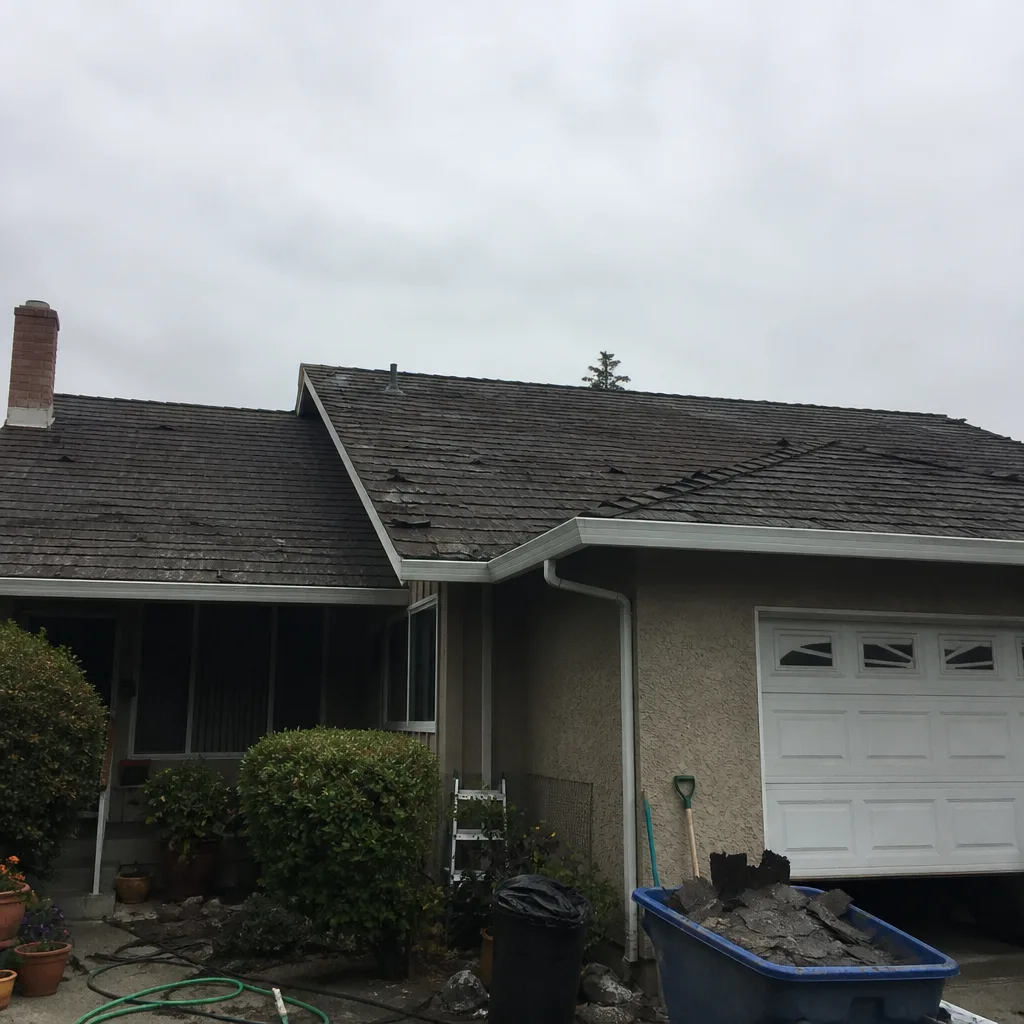 Before
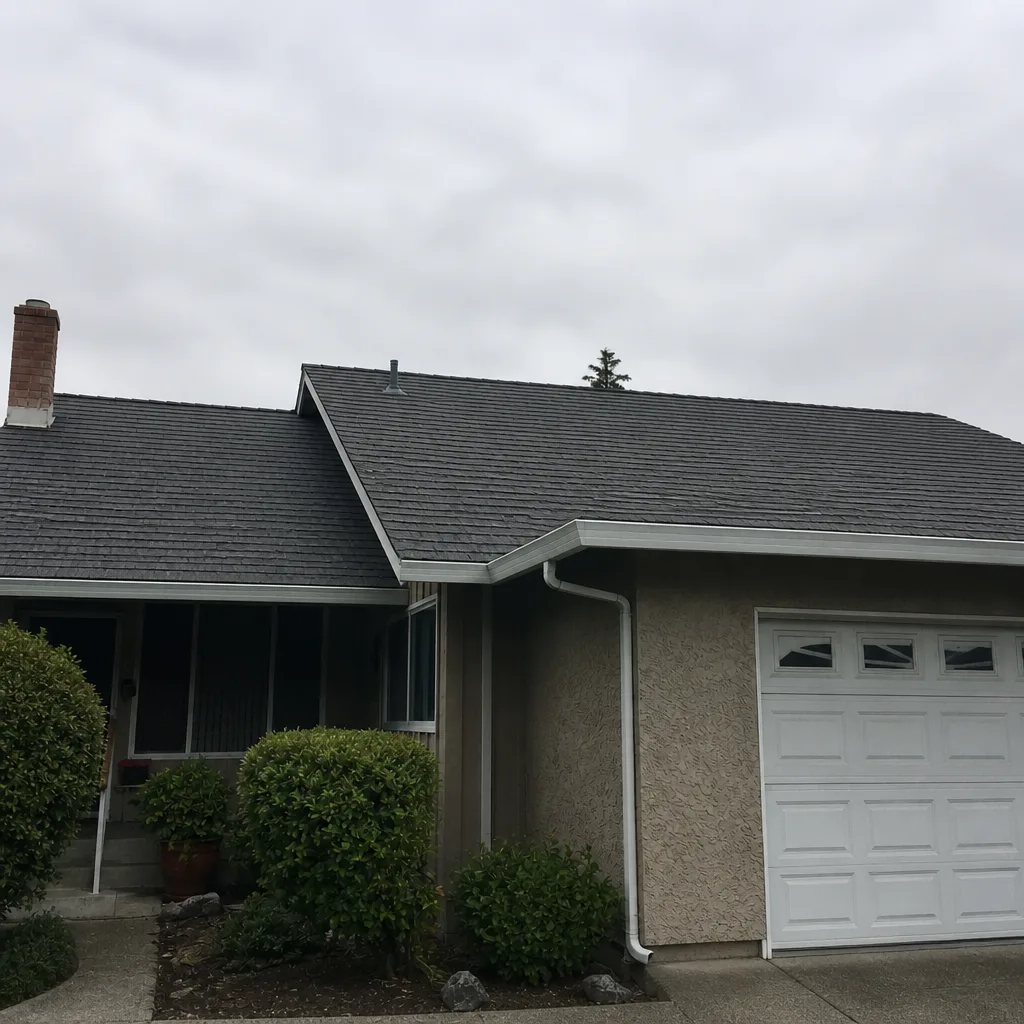 After
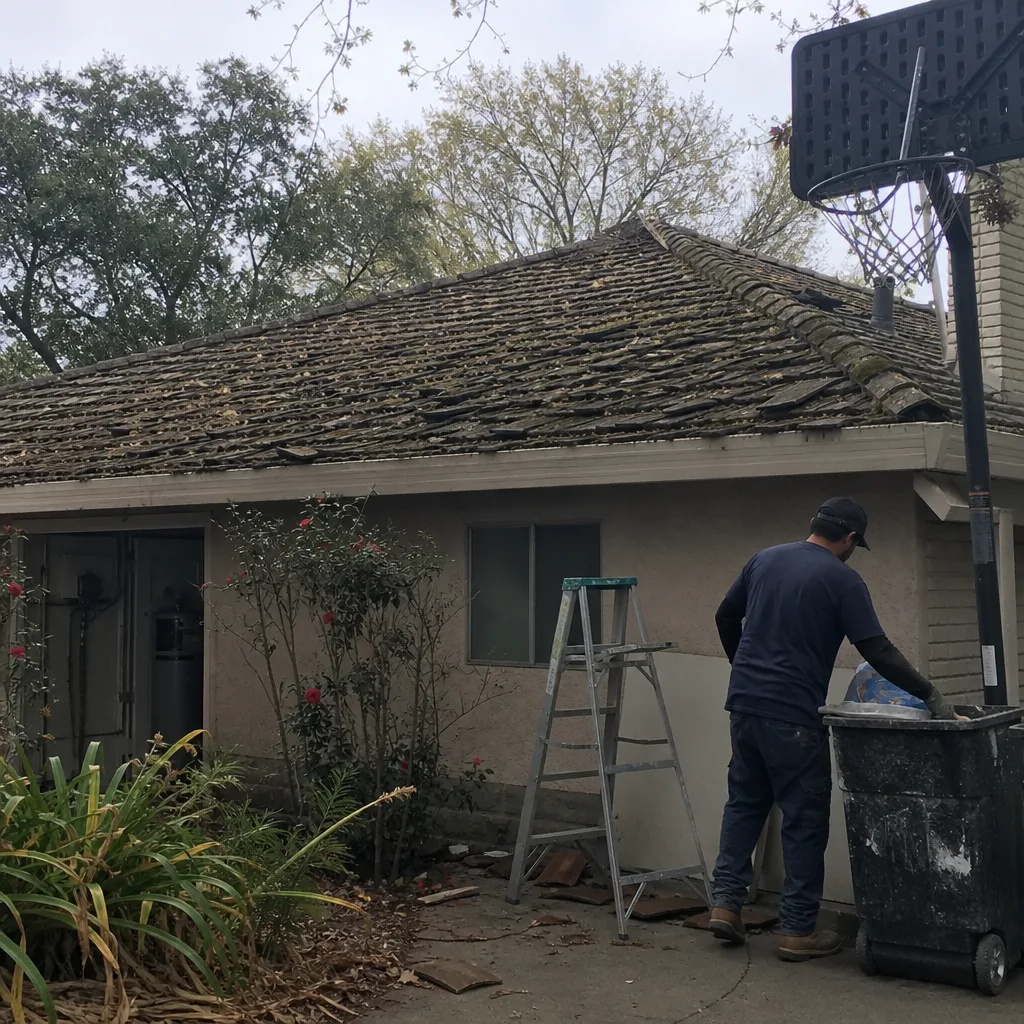 Before
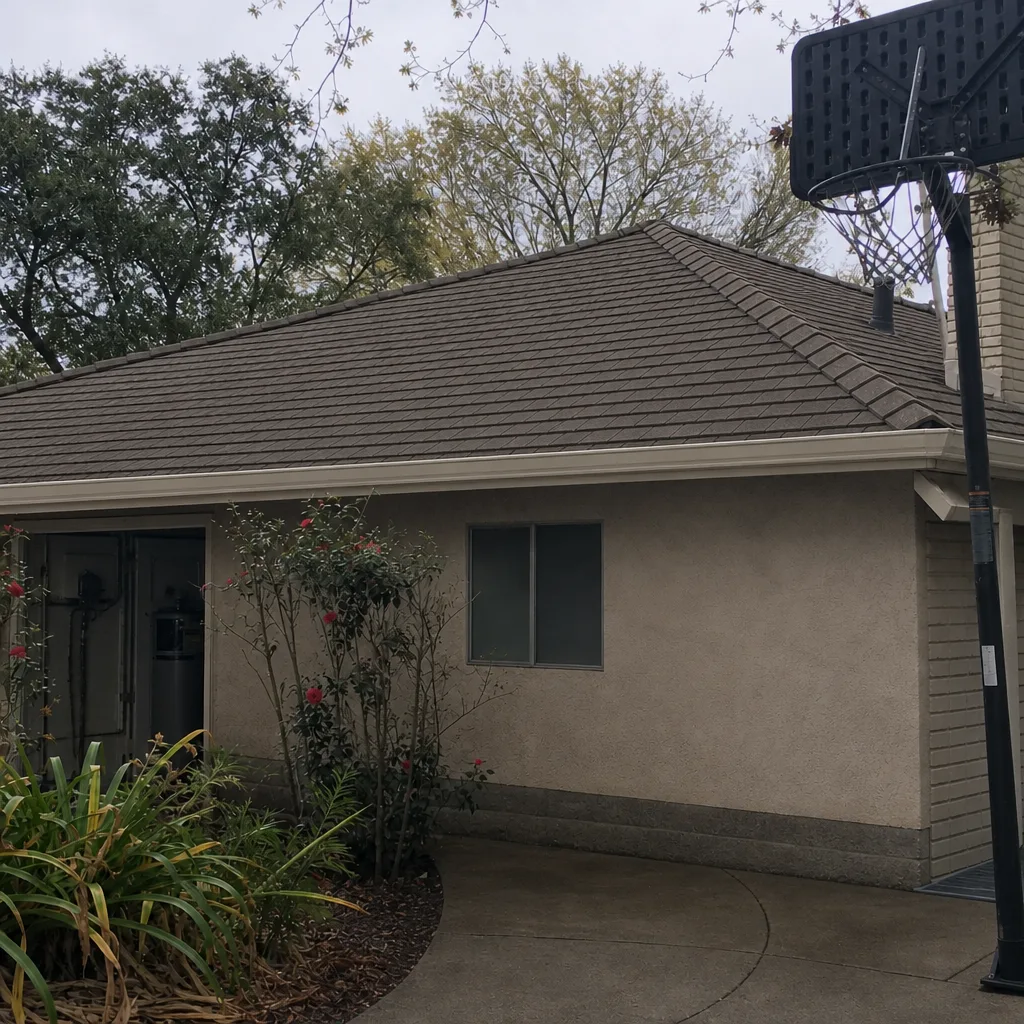 After
When to Call a Professional
Some roof problems announce themselves, and some wait until they’ve done real damage. Call a professional when you see a ceiling stain and can’t find its source, when shingles are curling, cracking, or blowing off after a wind event, when flashing around a chimney or skylight is lifting, or when the roof is past its expected life and you’re weighing repair against replacement. Call without delay if water is actively entering the house. Roof work involves heights, sharp tools, and the real risk of a fall, so diagnosis and repair belong with someone trained and insured for it. Sunstone Roof Repair offers free estimates in Santa Clara, and our technicians have up to 12 years of experience. Call (855) 473-8840. We answer 24/7. Fast dispatch from 7am to 7pm, Sunday through Friday.
Frequently Asked Questions
A full asphalt shingle replacement on a typical single-story Santa Clara home typically runs about $18,000 to $34,000, with tile at $28,000 to $55,000 or more and flat or low-slope re-roofing at roughly $14,000 to $26,000. The figure moves most on scope, tear-off, and permit, which is why a written line-item estimate is the number to trust. Call (855) 473-8840 for an exact quote. Estimates are free.
It shouldn’t, if the estimate is written as fixed pricing with no change orders. The wildcards are sheathing discovered soft during a tear-off and any scope you add mid-project, so ask for the per-sheet sheathing figure in writing before you sign. With that in hand, the written estimate sets the final price. Call (855) 473-8840 to walk through a line-item quote.
Yes, permit-pulling and inspection are part of the job, and the permit should be in the contractor’s name rather than yours. We pull permits and coordinate the inspections on projects we perform for Santa Clara homeowners. If any bid you’re weighing leaves the permit to you, ask why. Call (855) 473-8840 to talk through the permit process for your roof.
A repair is the better value when the roof has years of life left and the damage is localized, while a replacement is the better value when the roof is near the end of its life or failing in multiple places. The honest way to decide is an inspection that carries no financial incentive to push either one. Call (855) 473-8840 to schedule one. Estimates are free.
Most single-story shingle replacements take a handful of days once work starts, tile takes longer, and a spot repair is usually a same-day visit. The bigger schedule variable in Santa Clara is permit processing time, so start the permit early. Call (855) 473-8840 for a timeline based on your specific roof.
Yes. We work with seven major manufacturers, including Owens Corning, IKO, Atlas, and Tamko, across value and premium lines. That range lets us match replacement sections to your existing roof or pick the best-value material for your climate and budget, rather than pushing a single brand. Call (855) 473-8840 to compare material options for your roof.
The Bottom Line
Santa Clara roofing costs come down to scope far more than brand. A spot repair runs roughly $450 to $1,200, asphalt shingle replacement $18,000 to $34,000, tile $28,000 to $55,000 or more, and flat or low-slope work $14,000 to $26,000. The $8,000 gap between two honest quotes on the same roof lives in tear-off versus overlay, disposal, permits, and sheathing contingencies, not in the shingle name. Read every estimate line by line, ask which scope it assumes, and get the sheathing and change-order terms in writing. Do that, and the comparison becomes fair. Sunstone Roof Repair offers free estimates with written line-item quotes, and we’ll tell you exactly what your roof needs: repair, replacement, or nothing at all.
Ready for a straight answer on your roof? Call (855) 473-8840 to schedule your free estimate. We answer 24/7. Fast dispatch from 7am to 7pm, Sunday through Friday.
Written by the team at Sunstone Roof Repair.