
Last updated November 14, 2026
 Architectural shingles
 Metal roofing
 Tile roofing
 GAF
 Owens Corning
 Flat & low-slope
Free roof inspection with deck photos before we talk money - GAF and Owens Corning certified installation
Roof Repair Troubleshooting in Santa Clara: Common Problems and How to Fix Them
If you can see a water stain on your ceiling, the entry point is almost never directly above it. Water travels along rafters and sheathing before it drips, sometimes running 6 to 8 feet from the actual breach before it finds a way through your drywall. That single fact explains why some roofs get repaired twice: the first repair chases the symptom, not the source. This guide maps the failures we see most often on Santa Clara roofs back to their true causes, shows you what to look for from the ground, and tells you plainly which observations are safe to make yourself and which need a trained eye on the roof.
Quick Answer
Most roof leaks in Santa Clara trace back to five failures: cracked ridge caps, failed flashing at chimneys and skylights, lifted shingles at the rake edge, wind-driven debris damage, and worn sealant at penetrations. The visible symptom indoors rarely sits under the actual breach, so proper troubleshooting means tracing water back along a rafter and inspecting the roof surface at the likely entry points. Fixes range from resealing a small penetration to replacing a section of shingles and flashing – and a professional inspection is the only reliable way to tell which you need.
Styles & brands we work with
- Architectural shingles
- Metal roofing
- Tile roofing
- GAF
- Owens Corning
- Flat & low-slope
Table of Contents
- The Five Most Common Roof Failures in Santa Clara
- Why Your Leak Isn’t Where the Stain Is
- Condensation or Active Leak? How to Tell the Difference
- Where Wind-Driven Debris Hits a Santa Clara Roof Hardest
- What Granule Loss in Your Gutters Is Telling You
- What You Can Safely Check From the Ground
- How Each Common Problem Actually Gets Fixed
The Five Most Common Roof Failures in Santa Clara
Nearly every leak we troubleshoot in Santa Clara falls into one of five categories. Knowing them helps you describe the problem clearly when you call, and it helps you understand why a technician wants to look somewhere other than the obvious spot.
- Cracked or deteriorated ridge caps. The caps along the peak take the most direct sun on a Santa Clara roof, and the constant expansion and contraction of long, hot dry seasons takes a toll on the sealant and the cap shingles themselves. Hairline cracks at the ridge let water in during the first sustained rain of the season.
- Failed flashing at the chimney. The metal that seals the joint between roofing and chimney masonry relies on stepped flashing and counter-flashing set into the mortar. When the sealant around it dries out or a step flashing pulls loose, water runs straight down the chimney face and into the attic.
- Failed flashing at skylights. Skylight curbs are another common leak point. The flashing kit around the frame is only as good as its seal, and on an older Santa Clara home it’s often the first thing to fail before the shingles around it do.
- Lifted shingles at the rake edge. The rake edge is the sloped edge of the roof, and it catches wind head-on. Adhesive strips that have aged out let shingles lift, which lets water blow underneath during a storm.
- Worn sealant at pipe boots and penetrations. Every vent pipe poking through your roof sits inside a rubber boot. The rubber cracks and the sealant around it dries out – a small, cheap failure that causes a disproportionate number of ceiling stains.
What these five have in common is that they’re all joint-and-edge problems. The field of shingles in the middle of your roof is usually the last thing to fail. The failure starts where different materials meet, or where the roof ends. That’s where troubleshooting should start too.
Why Your Leak Isn’t Where the Stain Is
Water is patient. It follows gravity, but it follows the path of least resistance first – along the top of a rafter, down the back of a sheathing panel, across a joist. By the time it soaks through your ceiling drywall, it might have traveled 6 to 8 feet horizontally from the breach. Chase the stain with a ladder and a flashlight and you’ll usually end up staring at the wrong part of the roof.
This is why a proper troubleshooting visit starts in the attic, not on the shingles. Reading the water trail backward – from the wet spot up the rafter to the point where it first appears – is the most reliable way to find the actual entry. It’s also why we never quote a repair based on a phone description alone. The stain tells you there’s a leak; the attic tells you where.
A few things a trained eye looks for during that trace:
- Water staining on the underside of sheathing – a dark or discolored line leading uphill from the drip point.
- Rust or corrosion on nail points poking through the roof deck – a strong sign water is sitting on that panel.
- Daylight visible through the roof deck – a breach in the surface right above that spot.
- Damp insulation batts – insulation holds water and shows the trail even after the wood dries.
If you’re seeing a recurring stain that reappears in the same place after every rain, the previous repair likely sealed the symptom rather than the source. That’s a pattern we see often, and it’s fixable – it just requires finding the original breach first.
Condensation or Active Leak? How to Tell the Difference
Not every water problem on a Santa Clara roof is a leak. Condensation causes stains that look almost identical to active leaks, and the fixes are completely different – so misdiagnosing one as the other wastes money on a repair that won’t solve anything.
Condensation happens when warm, moist air from inside the house meets a cold surface in the attic and turns to water. In Santa Clara, this typically shows up during the cooler months when the interior is warm and the roof deck is cold. The wetness tends to be widespread rather than concentrated, frost or moisture beads on the underside of sheathing, and the ceiling stains may be diffuse rather than a single growing spot.
An active leak, by contrast, usually tracks with weather. Here’s a quick comparison:
| Signal | Condensation | Active Leak |
|---|---|---|
| Timing | Cool nights, dry weather, bad ventilation | During or shortly after rain |
| Pattern | Broad, diffuse dampness | Concentrated stain that grows |
| Location | Usually near the ridge or on the north side | Often traced from a vent, chimney or skylight |
| Smell | Musty but not from wet wood | Wet wood, sometimes mold |
| Fix | Ventilation and moisture control | Roof repair to close the breach |
If you’re not sure which you’re dealing with, that’s exactly what an inspection is for. An honest inspection should tell you whether you need a repair, a ventilation fix, or nothing at all. Sunstone Roof Repair offers a standalone roof inspection for exactly this reason – you get a diagnosis without any obligation to buy a repair afterward.
Where Wind-Driven Debris Hits a Santa Clara Roof Hardest
When the strong, dry winds sweep through the South Bay – the kind that pick up grit, palm fronds, small branches, and loose roof granules – they hit certain parts of a Santa Clara roof far harder than others. Knowing these vulnerable spots helps you focus your inspections after a windy stretch.
The rake edge is the front line. It faces the open side of the house, catches the wind head-on, and is where shingles lift first. The ridge is next – high, exposed, and often the oldest part of the roof system. Valleys, the V-shaped channels where two roof planes meet, are where debris collects and where water concentrates. And any chimney, skylight, or vent penetration on the windward side of the roof is a magnet for small debris that can work its way into the flashing and break the seal.
After a windy stretch:
- Walk the perimeter of the house and look up at the rake edges – are any shingle edges lifted?
- Check the ground along the windward side for a scattering of loose shingles, cap fragments, or a sudden accumulation of grit.
- Look at your valleys from a distance – is debris piling up in the channel?
- Check the chimney and skylight from below where you can – is there daylight or dampness where there wasn’t before?
If you see lifted shingles, don’t press them flat yourself. Adhesive that has failed once won’t hold, and a pressed-down shingle hides the fact that it’s already broken – which means the next rainstorm is the one that finds out.
What Granule Loss in Your Gutters Is Telling You
Granule loss isn’t cosmetic. Those granular beads on asphalt shingles protect the asphalt underneath from the sun, and when they’re gone, the asphalt dries, cracks, and stops doing its job. Every granule that ends up in your gutter is one less layer of protection on the roof.
A small amount of granule loss is normal on any asphalt roof, especially in hot, sunny climates. What’s worth paying attention to is the pattern. A thin scatter of granules in the gutters after a hot summer and a few windy days is expected. A steady accumulation that leaves a visible grit layer in the gutters, or noticeable bald spots on the shingles themselves, is telling you the roof is aging faster than it should.
How to use it as an indicator without getting on the roof:
- Look in the gutters after a windy day. A visible layer of black or gray grit is worth noting. Compare the volume to what you saw a year ago – more each year is a trend.
- Look at the downspout outflow. Granules washed out onto the driveway or rain garden are coming off the roof somewhere.
- Walk the perimeter after rain. Granules collect where the roof drains, and if the accumulation is heavy, that’s a signal to have the roof inspected.
This is where weighing your options matters. Granule loss that’s widespread across many shingles often points to a roof replacement – and we work with several material lines, including CertainTeed and Owens Corning, so you have genuine choice in the new system rather than a single default. Localized granule loss on a handful of shingles is often just a candidate for roof repair. The difference between the two is something a proper inspection can settle.
What You Can Safely Check From the Ground
A lot of roofing troubleshooting can be done safely from the ground, and doing it before you call gives you better questions to ask. But there’s a clear line between a useful ground-level observation and something that needs a trained technician on the roof.
Safe to check from the ground:
- Shingle edges at the rake – lifted, curling, or missing?
- Ridge cap condition, if the ridge is visible from a distance
- Debris accumulation in valleys and against the chimney
- Gutter condition, granule accumulation, and visible sagging
- Dampness or staining on exterior walls near the roofline
- Ceiling and attic access from inside the house
Needs a professional on the roof:
- Verifying shingle condition across the full field of the roof
- Tracing a leak to its actual entry point
- Checking the integrity of flashing at the chimney, skylights, or vents
- Confirming whether the decking underneath has rotted
- Checking attic-side moisture trails at the source
We can’t say this strongly enough: a wet or mossy roof is genuinely dangerous to walk on, and a fall is the worst outcome of any troubleshooting exercise. If you’re unsure whether your roof is safe to access, don’t test it. Call a professional and let them make the call – that’s what the inspection is for. It’s also worth knowing that some roof work in Santa Clara requires a permit from the city’s building department, so checking with them before scheduling major work is a good habit.
How Each Common Problem Actually Gets Fixed
What a repair looks like depends on the failure. Here’s how each of the five most common Santa Clara problems typically gets resolved, and which path – a targeted repair or replacement – makes sense.
Cracked ridge caps
A targeted repair: the cracked caps come off, the ridge is checked for moisture and deck damage, and new caps are installed with fresh sealant. Localized ridge cap damage on an otherwise healthy roof is almost always a repair, not a replacement.
Failed chimney flashing
The failed flashing is removed, the joint is cleaned, and new step flashing and counter-flashing are set. If the chimney’s masonry or the roof deck around it has absorbed enough water to rot, that section of decking gets replaced before the flashing goes back on. This is one of the most common roof repair jobs we see, and one of the most important to get right – it’s the flashing, not the shingle, that keeps water out of the joint.
Skylight flashing failure
Removing the skylight, re-sealing and re-flashing the curb, and then reinstalling the unit. On an older skylight, this is also the moment to consider whether the unit itself has reached the end of its life.
Lifted rake edge shingles
The affected shingles are replaced and the rake edge is checked for proper nailing and seal. If the rake edge has lifted because the roof deck is sagging, that’s a different problem and gets addressed first.
Worn pipe boots
The boot is replaced, the new boot is slid down over the pipe, and the seal around it is renewed. This is a small, straightforward repair, and it’s well worth doing before the next rainy season.
When the granule loss, shingle cracking, or deck damage covers a larger area, replacement is often the more honest choice than trying to patch multiple failures. We work with materials across the value, mid-range, and premium lines – including Owens Corning, IKO, and Atlas – so the recommendation is matched to your roof’s condition and your budget, not limited to one product. A full roof replacement is a bigger commitment, but when multiple failures stack up, it’s often the better long-term answer.
Common Mistakes to Avoid
- Sealing over the symptom. Slapping caulk on the wet spot in your ceiling or on the shingle below a stain stops nothing. The breach is still open, and the next rain finds it.
- Patching a leak on a rainy day. Sealant doesn’t adhere to a wet surface. A repair done during active rain comes back as a leak the following season. Wait for dry weather, or call for an inspection first.
- Pressing lifted shingles back down. The adhesive is already compromised. The shingle will lift again on the next windy day, and you’ll have lost the chance to see where the failure started.
- Ignoring condensation as if it were a leak. Fixing a vent doesn’t solve moisture problems, and replacing shingles doesn’t either. If the symptom is condensation, the fix is ventilation, and the conversation should be about that.
- Assuming granule loss is cosmetic. Heavy granule accumulation in your gutters deserves a look at the shingles above. That’s the early warning, not a nuisance.
- Skipping the permit conversation. Some roof work in Santa Clara needs a building permit. Before a contractor starts, ask whether a permit is required and who’s pulling it.
- Hiring without a diagnosis. If a contractor quotes a full replacement before getting on the roof and checking the attic, the quote is a guess. An inspection should give you answers, not a sales pitch.
When to Call a Professional
Call for a professional inspection when you see a ceiling stain that grows during or after rain, when shingles are visibly lifted or missing, or when you notice daylight in the attic where there shouldn’t be. Call if your granule accumulation in the gutters has visibly worsened year over year, or if you’ve had a previous repair that didn’t hold – a recurring leak after repair almost always means the original diagnosis missed the source. And call if you’re simply unsure: a professional inspection can tell you whether you need roof repair, roof replacement, or nothing at all, without you having to climb a roof you’re not comfortable on. Sunstone Roof Repair offers free estimates in Santa Clara – call (855) 473-8840. We answer 24/7. Fast dispatch from 7am to 7pm, Sunday through Friday.
See the difference
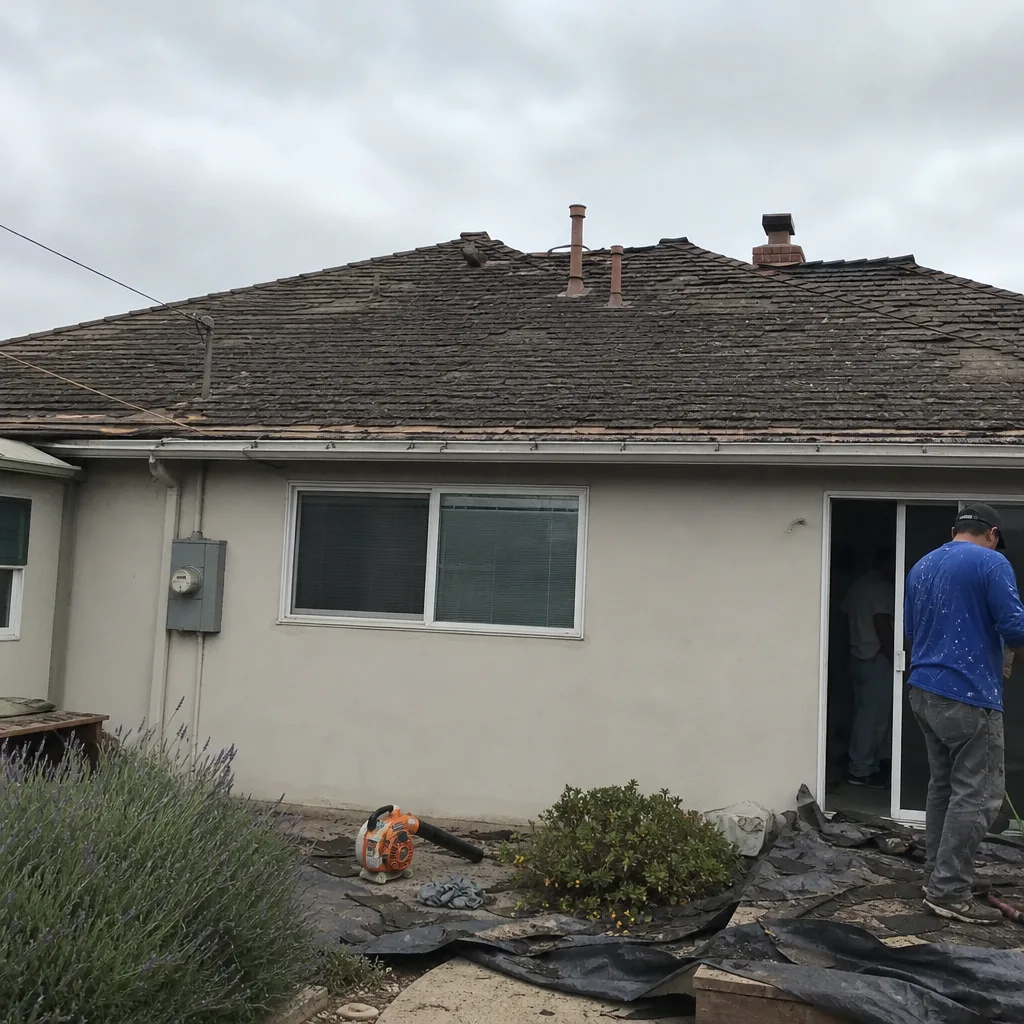 Before
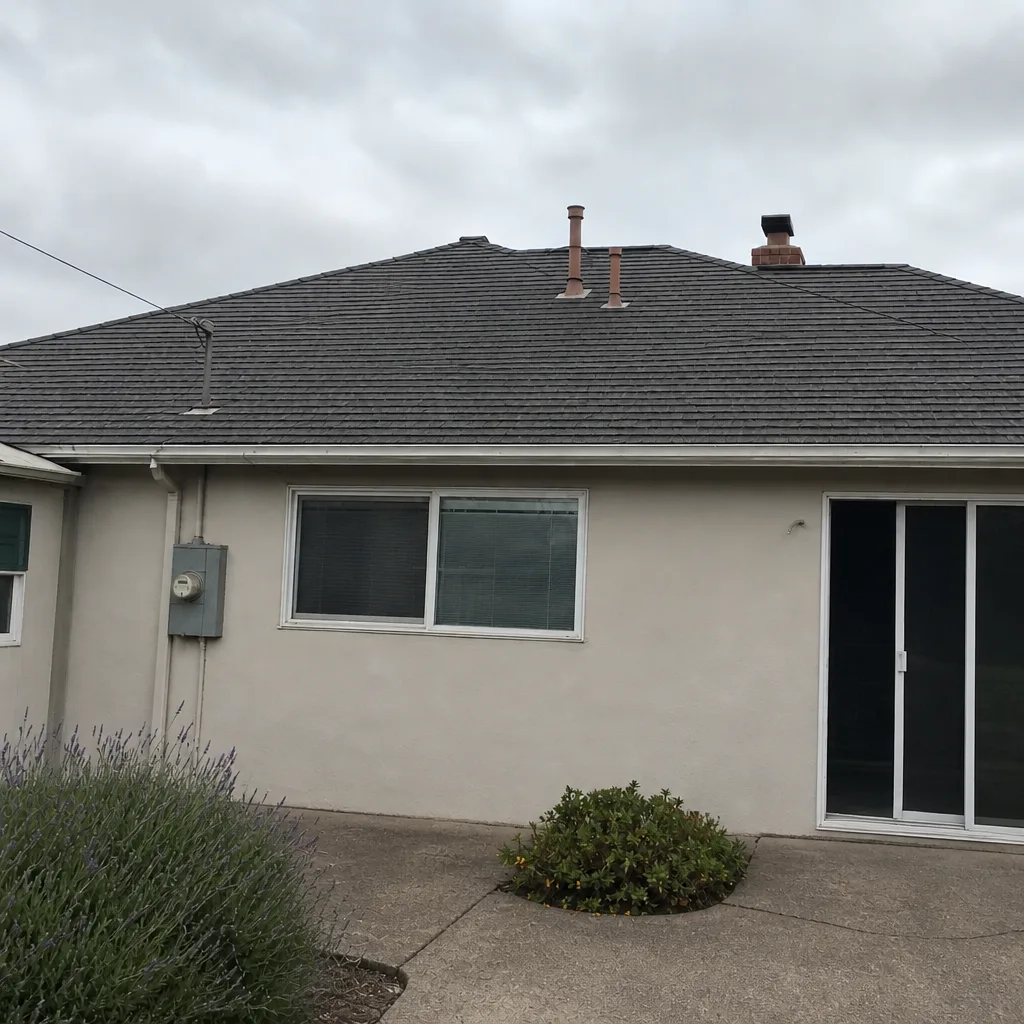 After
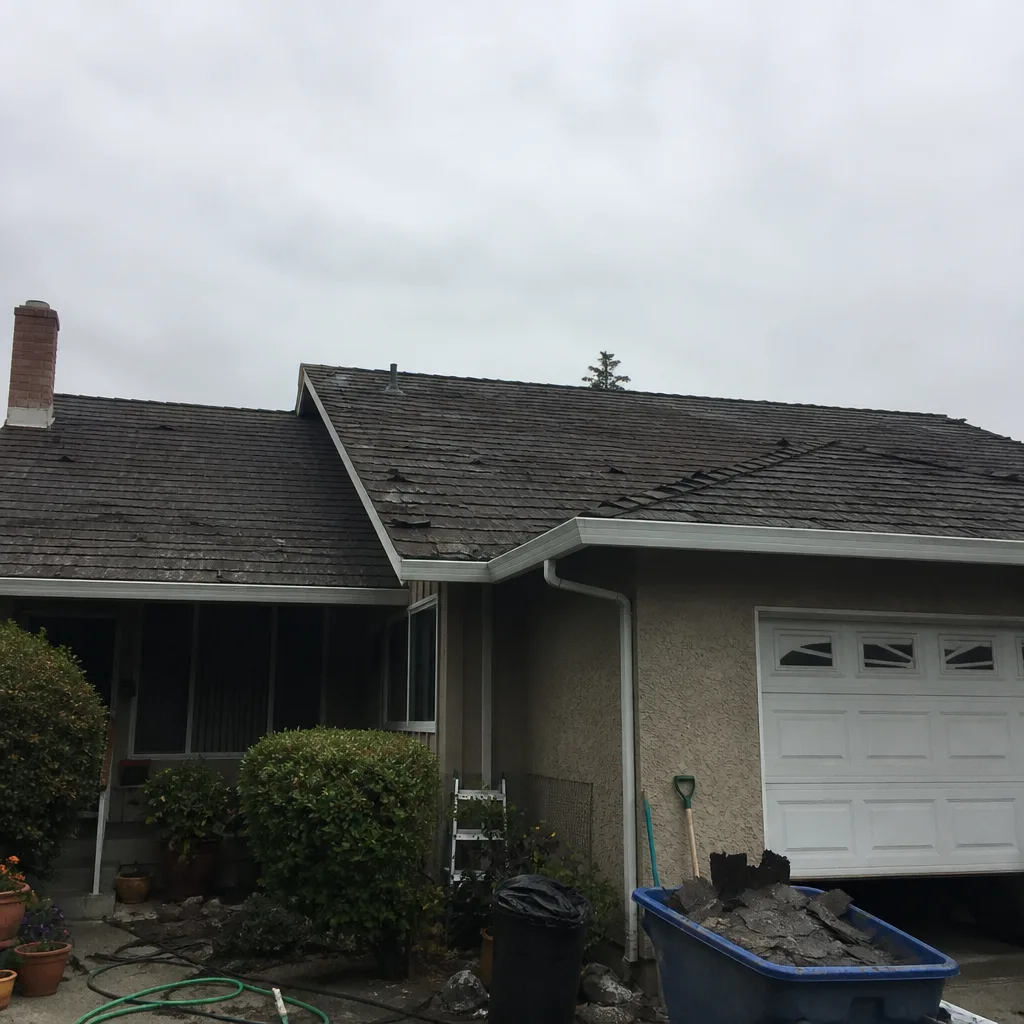 Before
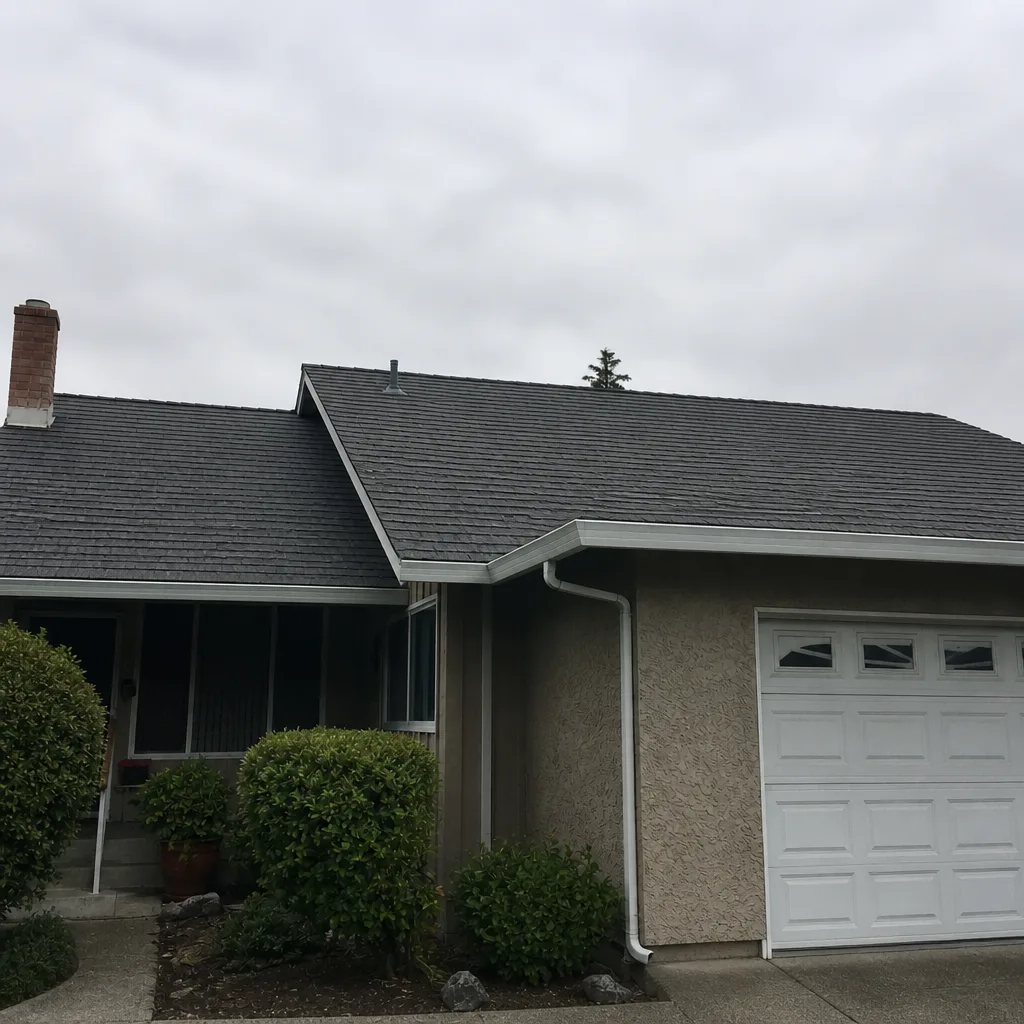 After
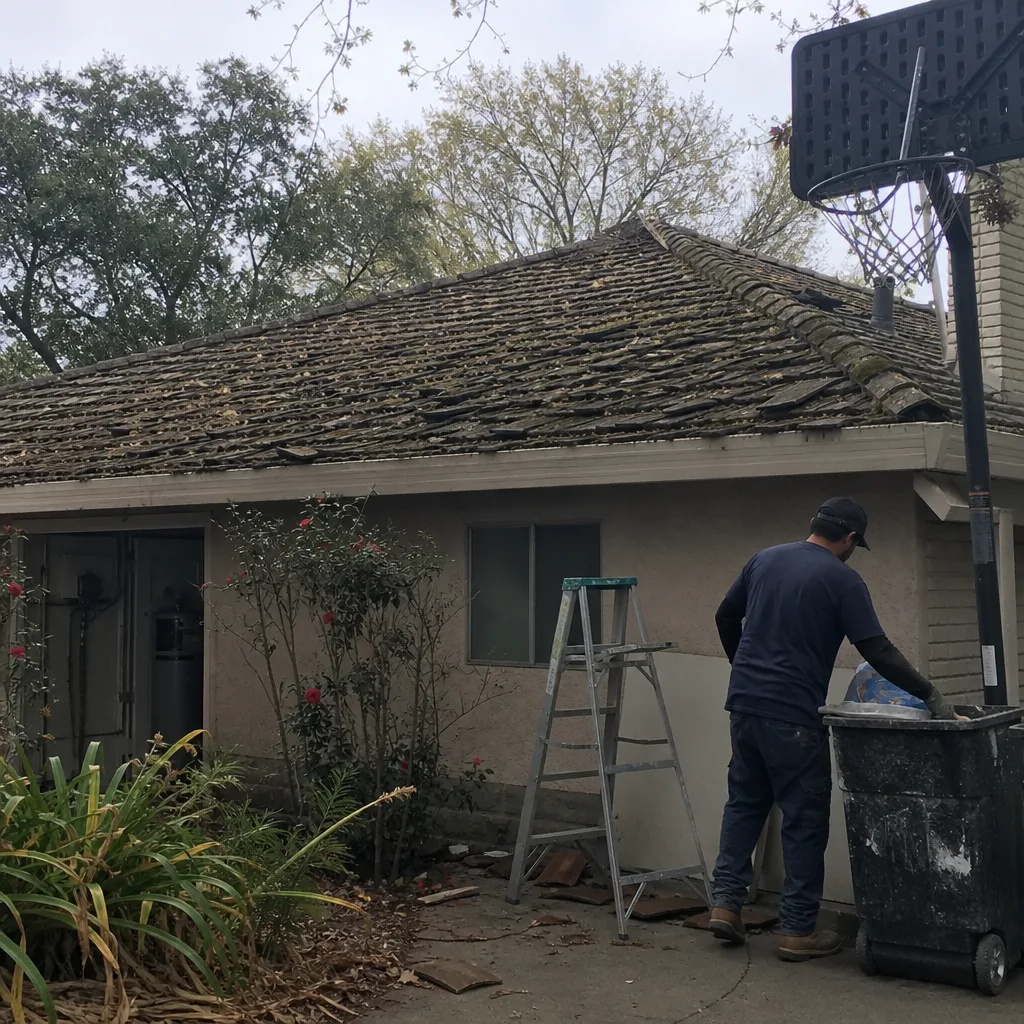 Before
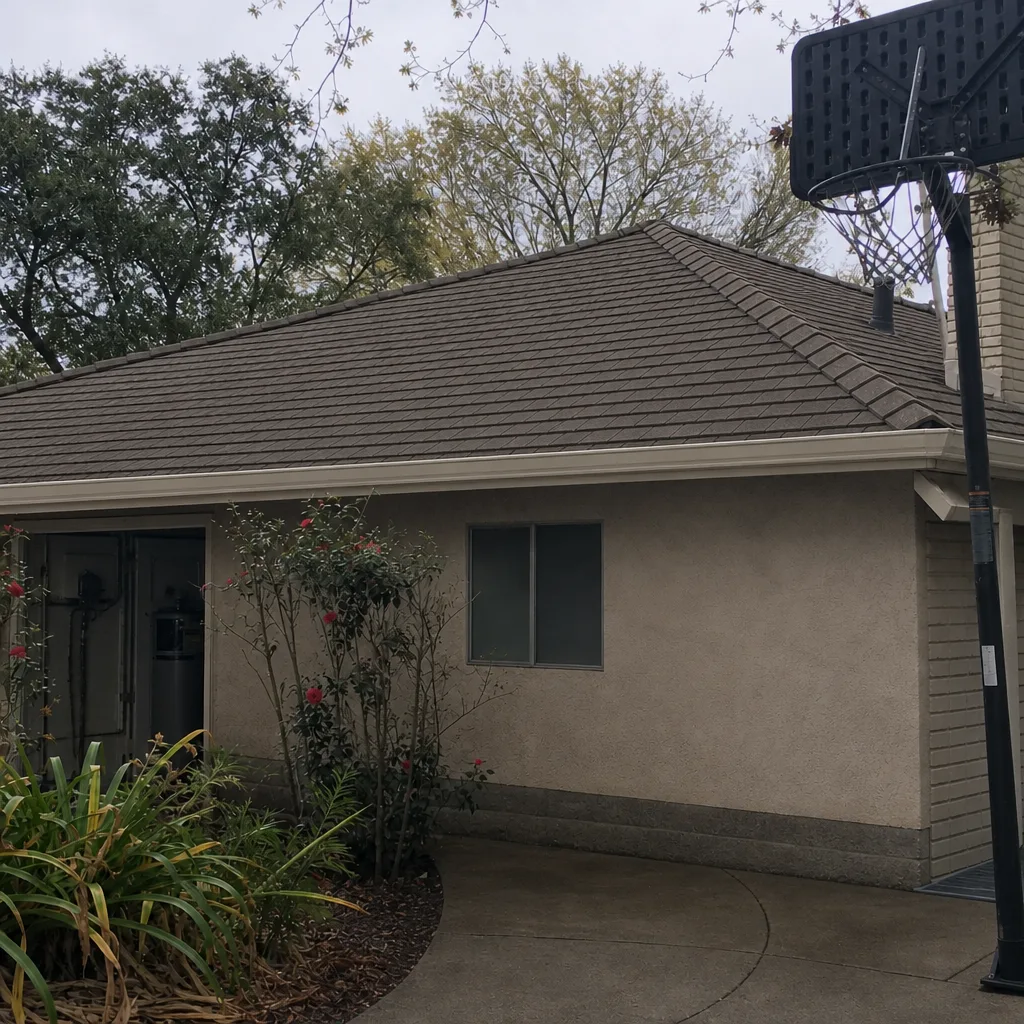 After
Same-Day Roof Repair in Santa Clara
When a leak is active and the forecast is against you, waiting isn’t always an option. We offer same-day roof repair in Santa Clara for leaks and storm damage where scheduling allows, and the same three-step approach applies whether the job is a small boot replacement or a full section of shingle work. If you’re not sure whether your issue is urgent, call and describe what you see – it’s a quick conversation, and it saves you guessing. Call (855) 473-8840. We answer 24/7. Fast dispatch from 7am to 7pm, Sunday through Friday.
Frequently Asked Questions
Most roof repairs in Santa Clara run from a small, targeted fix like a new pipe boot or a resealed chimney flashing up to a section replacement, and the price is set per job by a written estimate after a proper inspection. We don’t quote from a phone description, because the visible symptom often isn’t where the leak started. Call (855) 473-8840 for a free estimate – the written line-item quote sets the final price, and there are no change orders once work starts.
Yes, many leaks can be repaired the same day if the diagnosis is clear and weather allows. A worn pipe boot, a lifted rake shingle, or a cracked ridge cap are quick jobs. A leak that requires tracing through the attic or pulling apart a chimney flashing takes longer. Call (855) 473-8840 to schedule a same-day inspection and repair – the free estimate comes first.
If a stain appears or worsens without rain, the cause is usually condensation, not an active roof leak. Warm, moist interior air meeting a cold roof deck in cooler weather produces water that soaks into sheathing and drywall – the fix is ventilation and moisture control, not shingle replacement. Before assuming it’s condensation, though, have it inspected: the two look similar and require opposite responses. Call (855) 473-8840 for a professional diagnosis.
The honest answer is that you usually can’t from the ground, and anyone who tells you otherwise without getting on the roof is guessing. The deciding factors are how widespread the failures are, whether the decking underneath has rotted, and how much life is left in the shingle system as a whole. A standalone inspection settles it. We offer one with no obligation to buy a repair or replacement afterward. Call (855) 473-8840 to book it.
Some roof repairs in Santa Clara require a permit, and some don’t – it depends on the scope of the work. The safest approach is to ask the city’s building department before work begins, and to ask any contractor you hire whether they pull permits. A contractor who handles the permit and the inspection is one less thing for you to manage. Call (855) 473-8840 and we can walk through what your specific job is likely to need.
The dry season is generally the best window for roof repair in Santa Clara, because sealants and adhesives set properly on dry surfaces and the job can be done without weather delays. That said, a leak that’s active in the rainy season still needs attention – the risk of waiting outweighs the scheduling inconvenience. Call (855) 473-8840. We answer 24/7. Fast dispatch from 7am to 7pm, Sunday through Friday.
The Bottom Line
Most roof problems in Santa Clara aren’t mysterious – they’re joint failures, edge failures, and penetration failures, and they start somewhere other than the spot where you notice them. Trace the water back. Compare condensation against active leak symptoms. Watch your gutters for granule loss as an early indicator, not a cosmetic nuisance. Check what you can from the ground and leave the roof itself to a trained professional, because a false diagnosis is expensive and a fall is worse. And when you call, ask for an inspection first. Sunstone Roof Repair is the specialist who can tell you honestly whether you need a repair, a replacement, or simply a professional eye on the roof – and then do the right work.
Contact
If this guide gave you a better idea of what your roof is doing but not a clear next step, call Sunstone Roof Repair at (855) 473-8840 for a free estimate. We bring the full picture – inspection, repair, and replacement under one contractor – and we’ll tell you exactly what your roof needs, whether that’s a targeted repair or nothing at all. We work with seven of the industry’s most trusted shingle and roofing material brands so the right material is matched to your roof, your climate, and your budget. We answer 24/7. Fast dispatch from 7am to 7pm, Sunday through Friday. Learn more about our roof repair service and about Santa Clara at Sunstone Roof Repair.
Written by the team at Sunstone Roof Repair.