
Last updated November 14, 2026
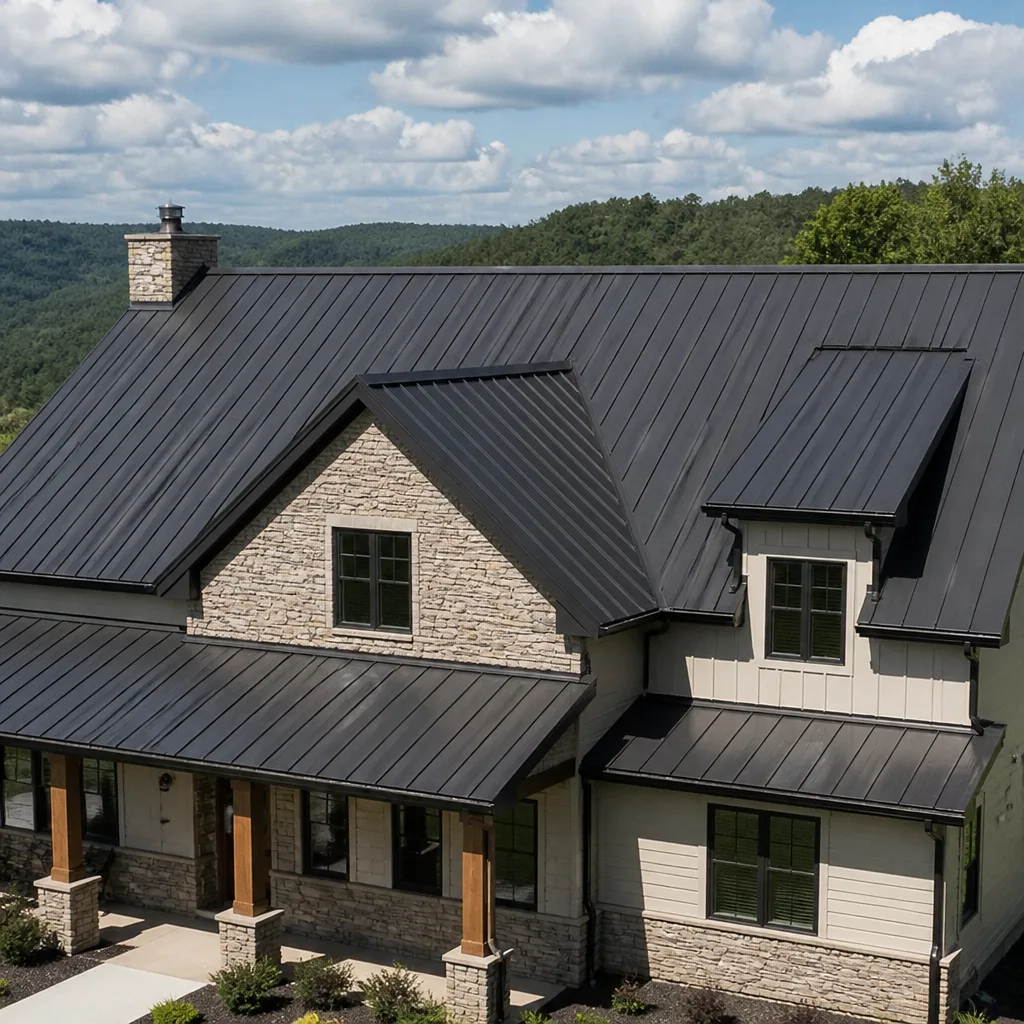 Metal roofing
 Architectural shingles
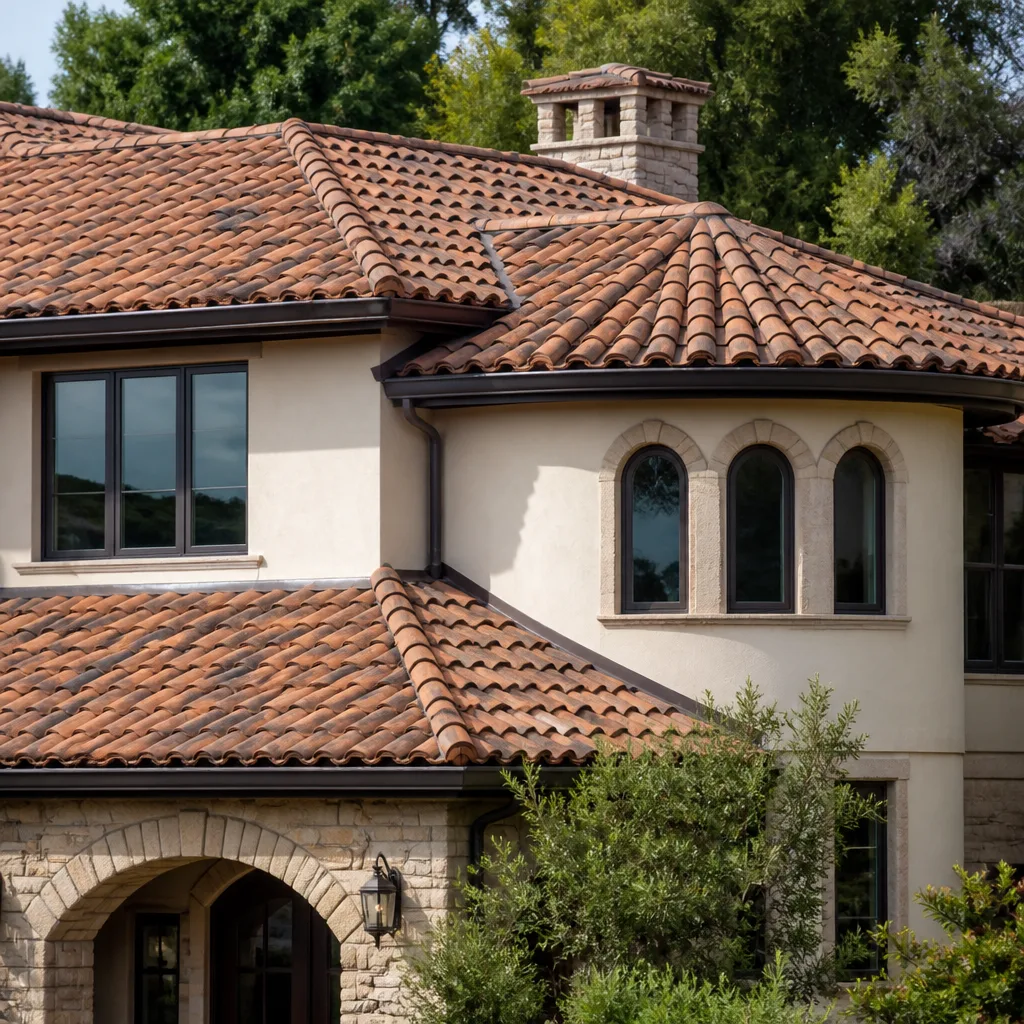 Tile roofing
 GAF
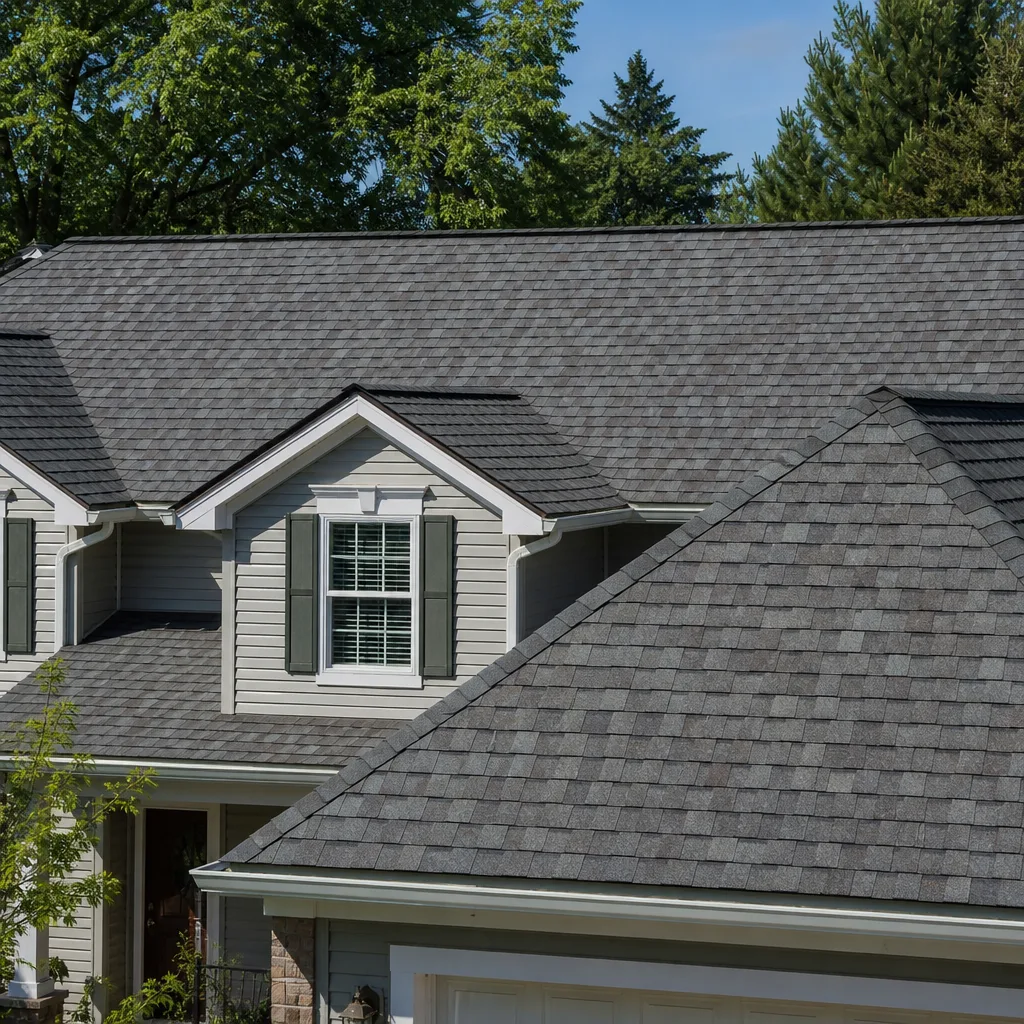 Owens Corning
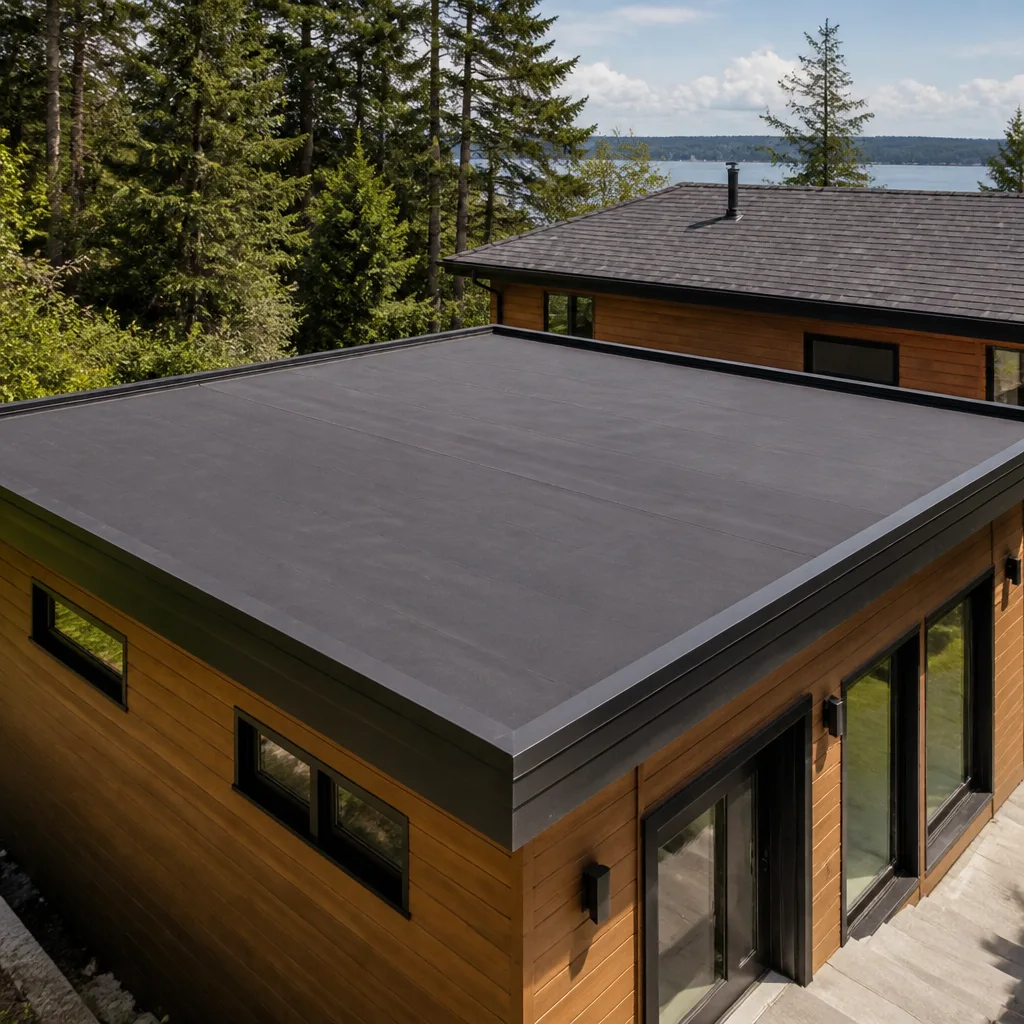 Flat & low-slope
Free roof inspection with deck photos before we talk money - GAF and Owens Corning certified installation
DIY vs Professional Roofing: The Santa Clara Homeowner’s Decision Guide
A Santa Clara homeowner can legally do their own roofing. That’s the part most guides skip. The moment you pull a permit under your own name, though, your homeowner’s insurance and your manufacturer warranty start treating the work very differently than they would licensed contractor labor. The skill question is real, but it’s the smaller question. This guide draws the line honestly: what California law lets you handle, what genuinely requires a licensed contractor, where the warranty quietly goes void, and how to be a sharp, informed participant even when you hand the job off. We won’t talk you out of the small stuff. We will tell you where a Saturday project turns into a liability you can’t undo. Santa Clara roofs sit under a mild, dry climate that forgives some shortcuts and punishes others, and the difference matters more here than the generic advice suggests.
Quick Answer
In Santa Clara, minor caulking, sealing small flashing gaps and replacing a couple of damaged shingles on a low, walkable pitch are reasonable DIY jobs for a careful homeowner. Anything that involves pulling a roofing permit, replacing large sections of the roof surface, correcting a leak’s actual cause, or working on a steep or fragile roof belongs with a licensed professional. The reason isn’t just skill: a DIY permit puts liability, insurance coverage and the manufacturer warranty on your shoulders instead of the contractor’s. Call (855) 473-8840 for a free estimate if you’re unsure which side of that line your job sits on.
Styles & brands we work with
- Architectural shingles
- Metal roofing
- Tile roofing
- GAF
- Owens Corning
- Flat & low-slope
Table of Contents
- What California Law Actually Allows You to Do on Your Own Roof
- The Owner-Builder Permit: What It Really Commits You To
- How DIY Installation Affects Your Roofing Warranty
- A Realistic Skill and Safety Assessment for Three Job Types
- The Hidden Costs of DIY Mistakes in a Santa Clara Market
- Insurance, Liability and the Question Nobody Asks
- How to Be a Smart Owner-Participant When You Hire Out
- When to Call a Professional
What California Law Actually Allows You to Do on Your Own Roof
California gives homeowners broad authority to work on their own primary residence, including the roof. You can repair, maintain and even re-roof the home you live in without holding a contractor license, provided you do the work yourself and don’t hire unlicensed labor to help. The catch is where the legal safety net ends. California’s licensing framework exists to protect the person paying for construction, and the owner-builder exemption assumes you’re the one both paying and swinging the hammer. The moment you pay someone else to do part of the work without a license, you’ve stepped outside that protection, and the risk lands on you.
Here’s how the lines generally fall for a Santa Clara roof:
- No license needed, no permit typically needed: Caulking around vents and pipe boots, sealing a hairline flashing gap, replacing a cracked shingle or two on a roof you can safely walk.
- No contractor license for your own home, but a permit usually applies: Larger repairs that change the roof covering, partial reroofing, anything a building department considers structural or covering-related work.
- Licensed C-39 roofing contractor required: Almost any scenario where you hire someone else to work on the roof, or any re-roofing you’re not doing yourself on a home you don’t occupy.
The C-39 classification is California’s roofing contractor license. A licensed C-39 professional carries the bond, insurance and accountability that let a permit be pulled in their name and pass inspection on yours. We’ve seen homeowners in Santa Clara start a repair with good intentions, then discover a deeper layer of the problem and end up needing a licensed contractor anyway, with a half-open permit and a partially removed roof in between. If that’s where you are, we can help you figure out the cleanest path forward. Start with an honest look at roof repair and what a proper assessment covers.
The Owner-Builder Permit: What It Really Commits You To
An owner-builder permit lets a homeowner pull a permit in their own name for work on their own residence. It sounds like freedom, and it is, but it’s freedom with obligations attached. When you sign as the owner-builder, you’re telling the city you are the responsible party for code compliance, inspections and the safety of the finished roof. You’re also accepting the inspection process on your own time, and you’re the one who pays for re-inspection if the first pass doesn’t clear. The permit isn’t a rubber stamp; it’s a contract with your building department.
For a Santa Clara homeowner weighing DIY, here’s the practical sequence a permit job involves:
- Confirm what your city requires. Most cities require a permit for re-roofing and for repairs that change the covering, so call the Santa Clara building department with your specific scope before you buy materials.
- Submit the application and scope. You’ll describe the work, the materials and the square footage. Understating the scope to save fees usually backfires at inspection.
- Schedule inspections at the required stages. Roofing permits typically involve at least a final inspection; some scopes require more. Miss a stage and the job stalls.
- Pass inspection or correct and re-inspect. Corrections are on you, and so is any delay they cause to the sale or refinance of the home.
- Keep the paperwork. A closed permit with a passing inspection is a real asset when you sell. An open permit can complicate a Santa Clara home sale or appraisal.
The owner-builder route makes sense for a confident homeowner doing a contained job on a simple roof. It stops making sense when the roof geometry is complicated, when you can’t be on site for inspections, or when you don’t have a clear read on what’s under the shingles. If you’d rather a licensed professional carry that permit and the accountability that comes with it, that’s a decision point worth a conversation, not a sales pitch.
How DIY Installation Affects Your Roofing Warranty
This is the part that surprises people most, and it’s where the DIY calculus in California diverges from states with looser rules. Roofing material warranties are written around the installer. A shingle is a product; the warranty on that product assumes competent, code-compliant installation, often by an approved or licensed installer. When the roof is installed by the homeowner, that assumption no longer holds. You may still get the material coverage, but the labor and workmanship portions, the parts that actually matter when a leak appears, frequently fall outside the warranty.
The manufacturers whose products we work with, including Owens Corning, IKO and Atlas, define installer qualifications in their own warranty documents, and the definitions vary by product line and by whether the installer is part of a manufacturer program. The core point holds across all of them: a warranty written for professional installation doesn’t automatically cover a roof a homeowner installed. If a covered failure happens on a DIY roof, the manufacturer can point to improper installation and decline the claim. That’s not a scare tactic; it’s how the documents read.
- Material coverage vs. labor coverage: Product warranties often cover defective shingles; workmanship coverage is the part tied to installer qualification.
- Approved installer thresholds: Some premium warranty tiers require installation by a contractor recognized by the manufacturer. A DIY install can void that tier entirely.
- Repair matching: If you later need a repair, a contractor working with multiple brand systems like GAF, CertainTeed, Owens Corning, IKO, Atlas, Tamko and Boral can usually match existing materials more precisely than a homeowner buying retail.
When you choose a contractor, ask which warranty applies to your specific product and what installer status it requires. That single question tells you more about the real warranty than any brochure. If you want to understand how a full replacement warranty differs from a repair-adjacent one, our guide to roof replacement walks through the product tiers.
A Realistic Skill and Safety Assessment for Three Job Types
The honest answer to “can I do this myself?” depends far less on confidence than on which of three categories the job falls into. We’ve seen homeowners handle the first category well and get into real trouble on the third. Here’s the split, calibrated for Santa Clara’s mild, dry conditions.
1. Minor caulking and flashing touch-ups: viable DIY
Sealing around pipe boots, vents and small flashing gaps is genuinely within reach for a careful homeowner on a roof you can safely access. These are the routine maintenance tasks that catch small water intrusion before it reaches the deck. Santa Clara’s dry stretches mean these gaps can sit for months doing quiet damage under a hot sun and stay invisible until a rainy season finally tests them. Learn the flashing details, use the right sealant for the material, and re-check annually. This is the category where DIY is reasonable and even smart.
2. Shingle replacement on a walkable pitch: conditional
Replacing a handful of damaged shingles on a low, walkable pitch is doable if you understand how to lift and interlock surrounding courses, match the material, and reseal properly. The condition is real, though: a misplaced pry bar cracks neighboring shingles, a poor match looks different within a season, and a patch that doesn’t seal invites the leak you were fixing. Approach this only if you can safely stand and kneel on the roof, you know your shingle type, and you’re willing to stop and call someone if you find soft decking or hidden damage. If any of those don’t hold, it’s a call-a-professional job.
3. Full re-roofing: professional territory
Full re-roofing is where DIY stops being a reasonable trade and becomes a genuine safety and liability problem. Roofs involve height, steep pitches, heavy material loads, and the physical risk of a fall that no warranty conversation can undo. Beyond safety, a full re-roof is a system: underlayment, flashing, ventilation and material integration all have to work together, and one weak layer shows up as a leak elsewhere. Layer in the permit and warranty issues, and the case is clear. This is a licensed professional’s job, full stop. Our team handles all three stages, and the surface it starts with is the inspection. Learn what that involves under Sunstone Roof Repair.
The Hidden Costs of DIY Mistakes in a Santa Clara Market
DIY looks cheaper until you price the rework. The costs hide in three places, and each one is common enough that we see it across Santa Clara neighborhoods, from the older single-story homes near Santa Clara University to the mid-century tracts off El Camino. The first is rework: a patch that fails, a flashing detail that leaks, a repair that has to be redone. The original material is wasted and the second attempt costs time on top of money. The second is material waste on complex roof geometries. A hip-and-valley roof with multiple penetrations and dormers eats material; a homeowner ordering for a simple calculation usually comes up short mid-job, then overbuys the rest at retail prices that contractors don’t pay. The third hidden cost is the premium a contractor charges to correct improper previous work. Undoing someone else’s flawed repair, especially a DIY one, takes more time than doing it right the first time, and that shows up in the estimate.
None of this is meant to shame anyone who’s tried. It’s meant to be honest about how the math actually works out. Here’s the accounting a homeowner should run before starting:
- Material you’ll waste: Get the number right, add for hips, valleys and cuts, and expect offcuts on anything but a simple gable.
- The permit and inspection time: An owner-builder permit is your hours, not a contractor’s.
- The risk of rework: Budget the mental and financial cost of doing it twice if the first repair doesn’t hold.
- The future repair premium: If your work fails and someone else fixes it, you’re paying twice and the second bill is higher.
A free estimate from a professional gives you the honest number for comparison, and there’s no obligation to move forward. That’s what a real inspection looks like. For more on when repair beats a full replacement, see our guide to repairing a damaged roof section.
Insurance, Liability and the Question Nobody Asks
Here’s the question that should sit at the top of every DIY decision, and it rarely does. If you do the work under your own permit and the roof fails, what does your homeowner’s insurance cover? The answer is not what most people assume. Policies are written for sudden, accidental damage, not for defective workmanship the homeowner performed or directed. A leak traced back to a DIY repair or install can be treated as a maintenance or workmanship issue, and that can put the resulting interior damage outside the claim. A licensed contractor’s work, by contrast, comes with contractor liability and, when the permit is pulled in their name, a documented inspection trail.
Insurance and liability questions shape the DIY decision more than skill does, and we’d rather a homeowner weigh them early than discover them after water is coming through a ceiling:
- Workmanship claims: A failed DIY repair may be excluded as your own work. A failed contractor repair is a contractor’s responsibility.
- Permit documentation: An inspection trail from a licensed professional strengthens a claim; an owner-builder permit puts the burden of proof on you.
- Sale and appraisal: Open permits and unpermitted work can surface during a Santa Clara home sale. Buyers ask, and a clean permit history answers.
- Neighbor and injury liability: If a repair fails and damages a neighbor’s property, or if someone is injured on the roof, the liability picture is far worse for unpaid, unlicensed DIY.
For higher-stakes jobs, this is the part that should end the debate. For a small, contained maintenance task, the risk is much lower. That’s the difference between a Saturday touch-up and a job that needs a licensed contractor.
How to Be a Smart Owner-Participant When You Hire Out
Hiring a licensed professional doesn’t mean handing over the keys and hoping. The best outcomes we see happen when a homeowner stays involved, asks good questions and holds the contractor to clear documentation. You’re the owner-participant, not a spectator. Start with an inspection from someone who will tell you what the roof actually needs, whether that’s a repair, a replacement or nothing at all. Our technicians have up to 12 years of experience, and the whole point of a standalone inspection is to give you answers before anyone asks you to buy. That’s the first step, and it should cost you nothing.
Here’s what to ask at each stage, so the job stays on solid ground:
- Before work starts: Ask which warranty applies to your material and what installer status it requires. Ask who pulls the permit and who pays for re-inspection. Get the scope in writing.
- During the job: Ask for the material delivery slips and confirm the brand and product match the estimate. If a contractor insists on a single brand and won’t explain why, ask what alternatives exist.
- At the roof surface: Ask to see the underlayment going down and the flashing details at penetrations. The details are where leaks start.
- At close-out: Request the passing inspection documentation, the material receipts, and the warranty registration in your name. Ask about workmanship coverage in writing.
We work with seven major roofing brands, from value-tier Tamko and IKO to premium GAF and CertainTeed, so you can match the product to your budget and your roof system rather than accept a single brand. That’s what being a Santa Clara specialist looks like: one contractor who can honestly say repair, replace or nothing at all.
See the difference
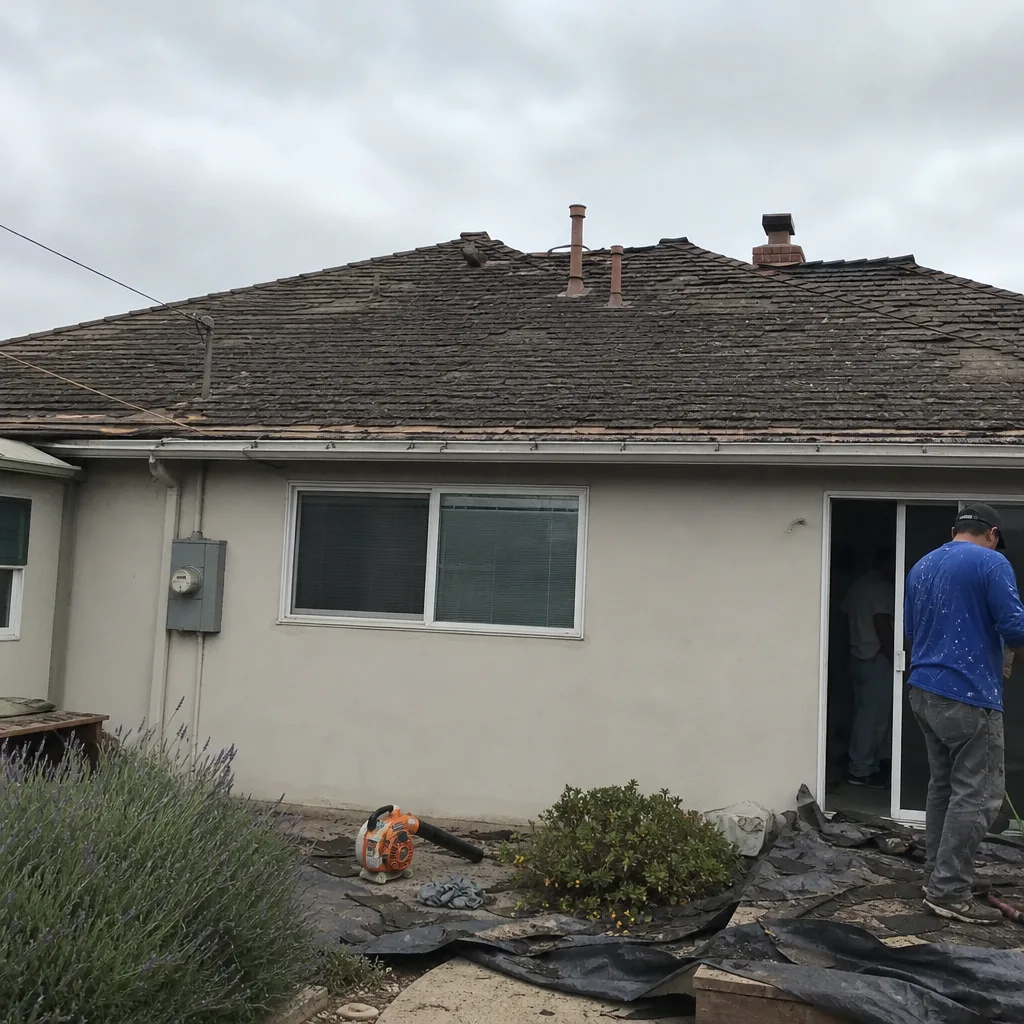 Before
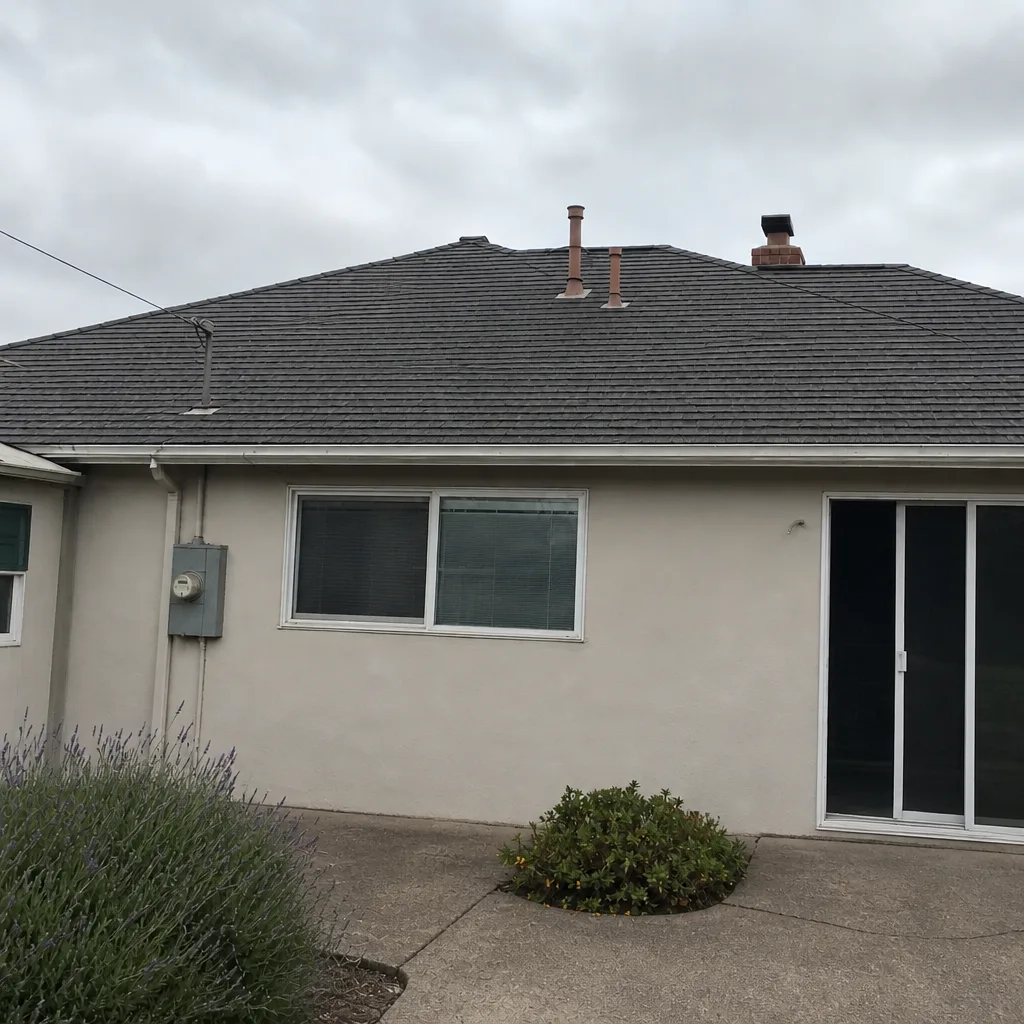 After
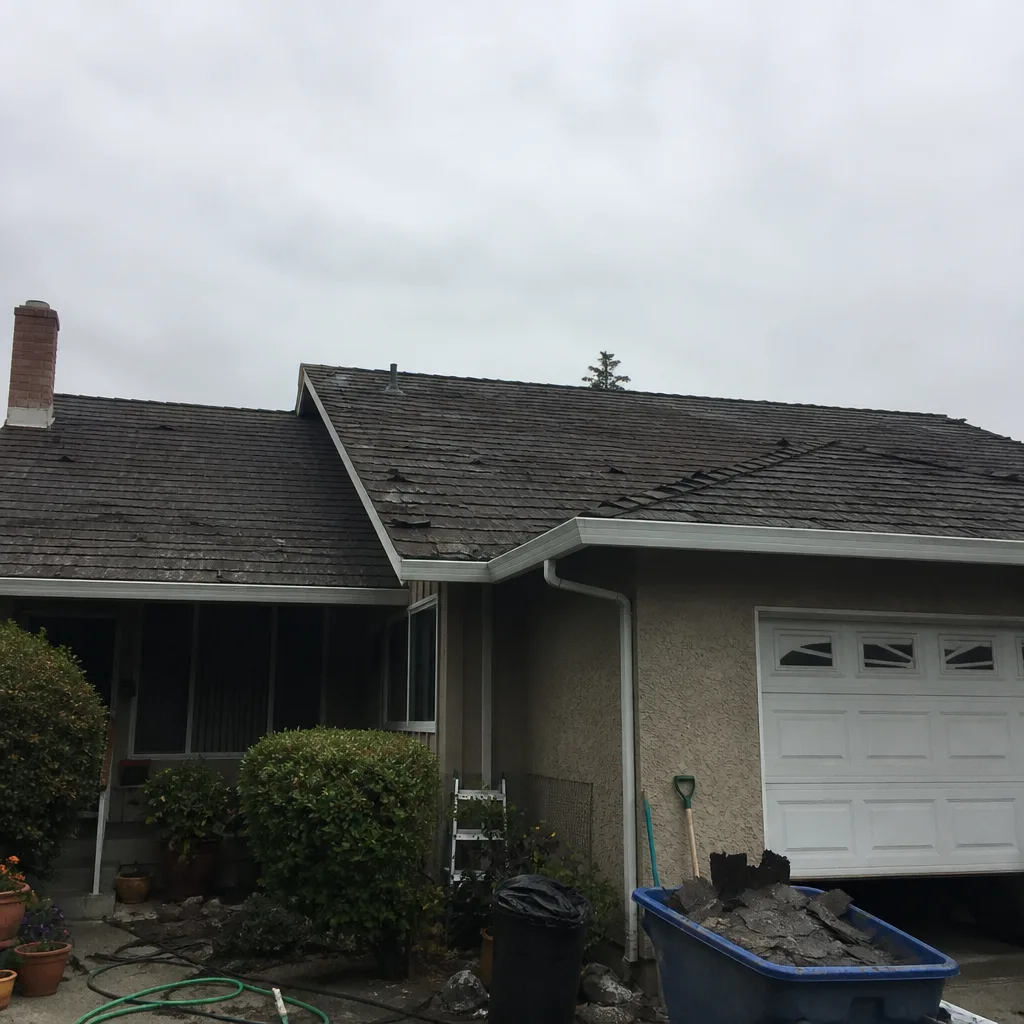 Before
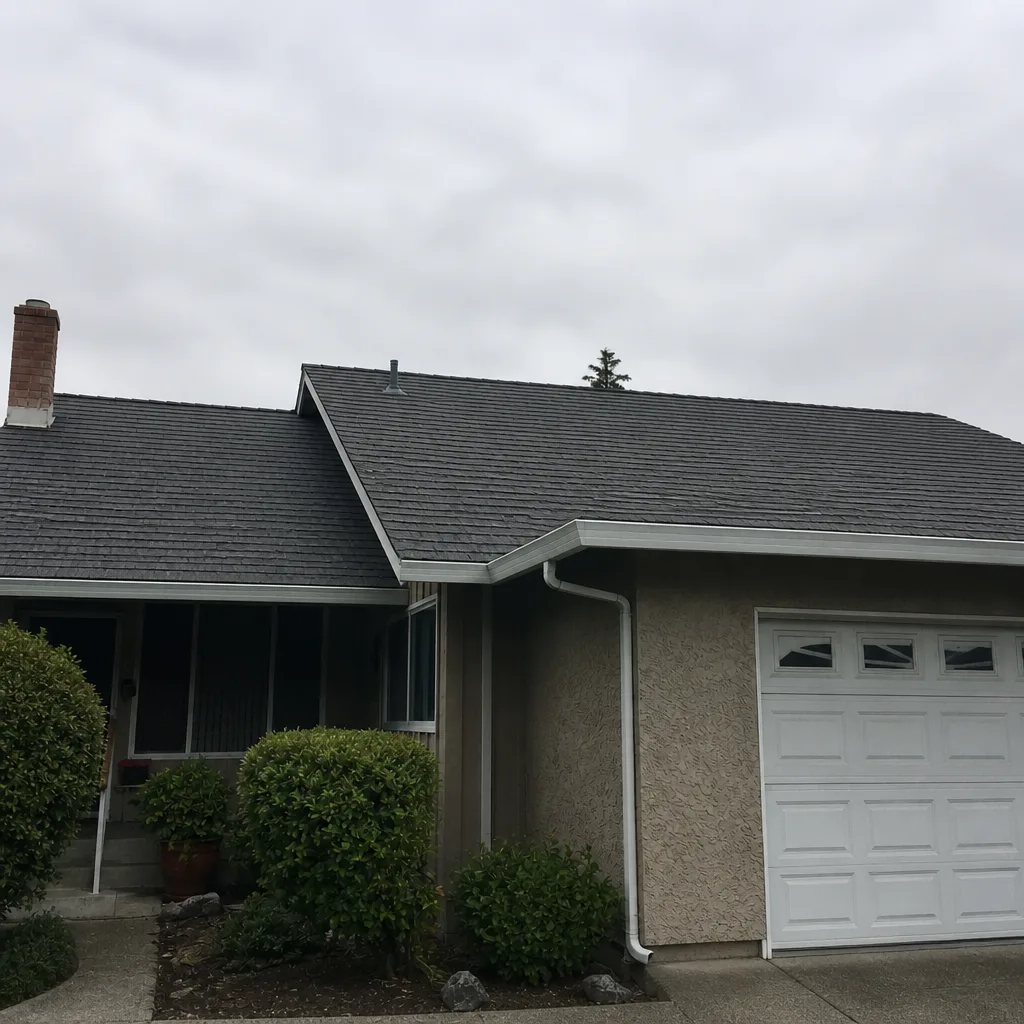 After
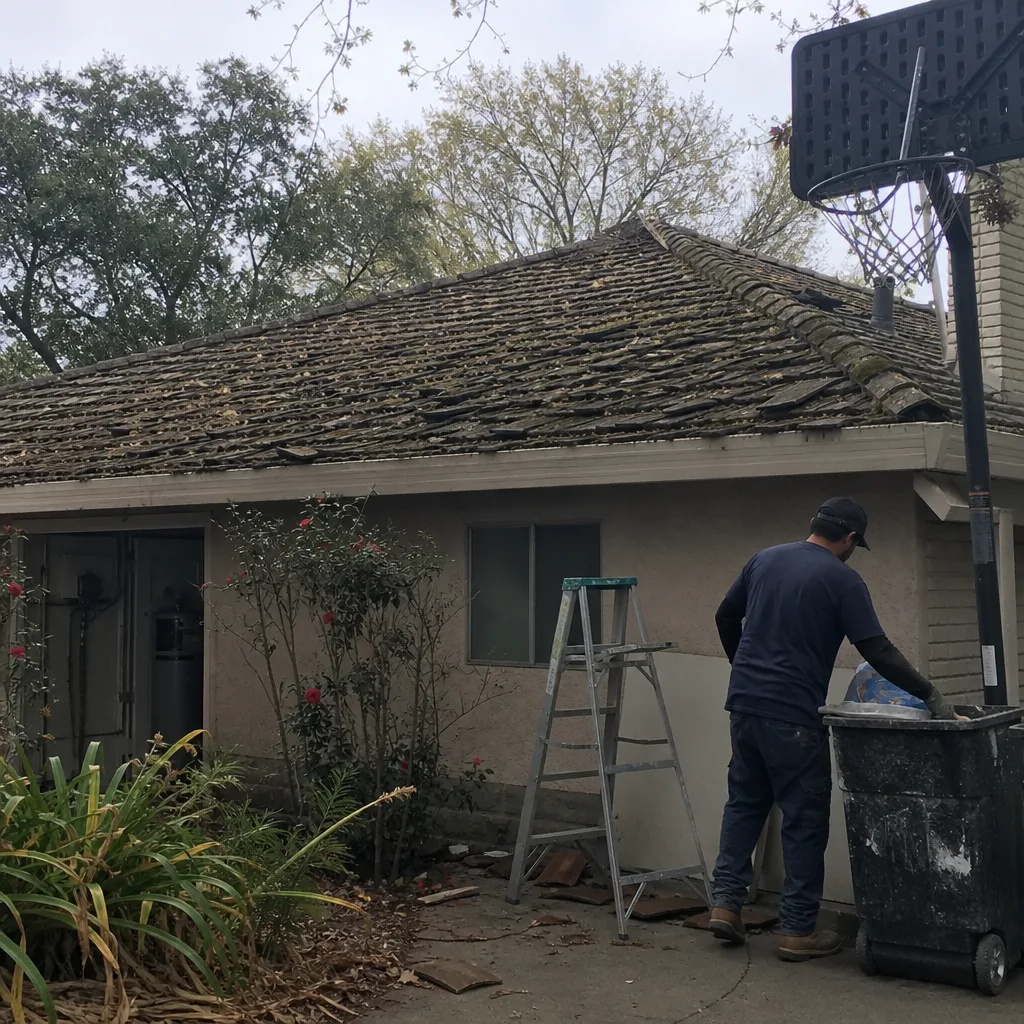 Before
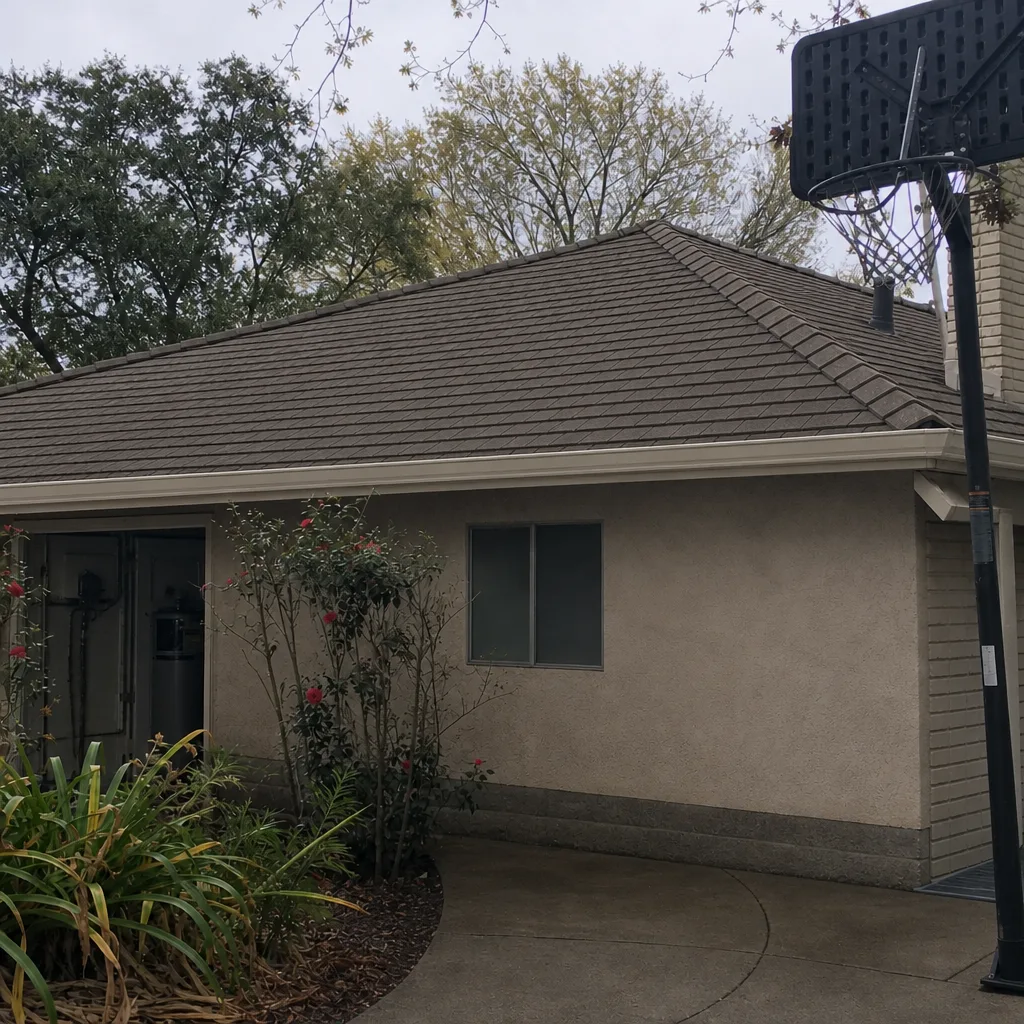 After
Common Mistakes to Avoid
- Understating the permit scope. Homeowners sometimes describe a small repair when the job is really a re-roof. That gap gets caught at inspection, and the correction eats more time than the honest application would have.
- Buying material before confirming the deck is sound. In Santa Clara’s older homes, soft decking hides under the shingles. Ordering material first means re-ordering after a mid-job discovery.
- Assuming the warranty survives a DIY install. It frequently doesn’t for workmanship or premium tiers. Read the warranty document, not the product brochure.
- Patch-matching a shingle from a roof color that’s faded. A new shingle on an older roof often looks different within a season. Match the product, not just the color name.
- Letting a repair go because the leak stopped. Dry weather in Santa Clara can pause a leak that’s still doing damage. A stopped leak isn’t a fixed roof.
- Skipping the inspection because a contractor offered a “free quote” for a replacement. A quote for replacement is not the same as an assessment that tells you whether repair would do.
- Not documenting the completed job. Missing inspection records and material receipts hurt at resale and weaken insurance claims. Keep the file.
When to Call a Professional
A few scenarios should send you straight to a licensed contractor, no hesitation. Any leak whose real source you can’t find is one; a leak is a symptom, and the cause is often several feet from the drip. Steep pitches, roofs with fragile or aging shingles that make walking dangerous, and any job above ground floor height call for trained hands. Anything involving a permit, a warranty claim, or a full or partial re-roof is professional territory. And any time you’re unsure which category you’re in, that uncertainty itself is the answer. Sunstone Roof Repair offers free estimates in Santa Clara, and a standalone inspection is exactly what we’re here for. Call (855) 473-8840 and we’ll tell you exactly what your roof needs. We answer 24/7. Fast dispatch from 7am to 7pm, Sunday through Friday.
Frequently Asked Questions
Yes, for work on your own primary residence, California’s owner-builder rules let you do repairs and maintenance yourself without a contractor license. Larger repairs and re-roofing usually require a permit pulled in your name, and any work you pay someone else to do requires a licensed C-39 contractor. If you’re unsure, call (855) 473-8840 for a free assessment. Estimates are free.
It can, especially for labor and workmanship coverage. Manufacturer warranties like those from Owens Corning, IKO and Atlas are typically written around professional, code-compliant installation, and a DIY install may fall outside that. Always read the specific warranty document for your product. Call (855) 473-8840 for an exact quote on professional installation. Estimates are free.
We don’t quote a dollar figure blind, because cost depends on the scope, the material and what’s found under the surface. A minor caulking or flashing touch-up sits at one end of the range, and a larger repair that addresses hidden damage sits at the other. The written estimate sets the final price. Call (855) 473-8840 for a free estimate.
That’s a common call, and it’s not a reason for embarrassment. The fix starts with finding the actual source rather than the original drip, and then correcting the repair properly. A standalone inspection gives you the honest picture. Call (855) 473-8840 and we’ll take a look. Estimates are free.
On a properly scoped job, the written estimate sets the price. Repairs and replacements sometimes turn up hidden damage once the shingles come up, and when that happens we show you what we found before anything changes. Scope changes should come with a conversation, not a surprise bill. Call (855) 473-8840 to get your scope in writing. Estimates are free.
Yes. When we handle the work, a licensed contractor carries the permit and the accountability that comes with it, including inspections and correction if anything needs rework. That’s the practical advantage over an owner-builder permit for anything beyond a minor repair. Call (855) 473-8840 to schedule your free estimate.
The Bottom Line
The DIY question in Santa Clara is really three questions in one: what the law lets you do, what your warranty and insurance will honor, and what’s actually safe on your roof. The first question has a generous answer. The second and third are where the line gets drawn, and they’re why a homeowner can handle caulking and small flashing touch-ups confidently, approach a shingle swap with real caution, and should hand a full re-roof to a licensed professional. A free inspection from Sunstone Roof Repair gives you the honest read, because an inspection should give you answers, not a sales pitch. Call (855) 473-8840 today.
Written by the team at Sunstone Roof Repair.